
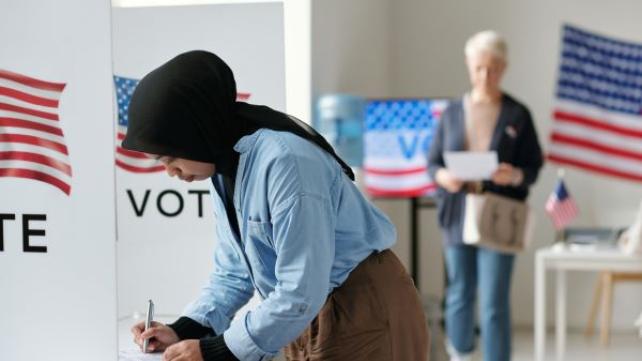
The Muslim family by the very foundation of faith are activists. Muslims are taught in the Holy Quran to enjoin what is good and forbid what is evil and harmful to mankind. Righteousness is defined in the Quran with both psychological and physical terms, – believing, giving, freeing, establishing, paying, fulfilling agreements and being patient during adversity
Righteousness is not in turning your faces towards the east or the west. Rather, the righteous are those who believe in Allah, the Last Day, the angels, the Books, and the prophets; who give charity out of their cherished wealth to relatives, orphans, the poor, ˹needy˺ travelers, beggars, and for freeing captives; who establish prayer, pay alms-tax, and keep the pledges they make; and who are patient in times of suffering, adversity, and in ˹the heat of˺ battle. It is they who are true ˹in faith˺, and it is they who are mindful ˹of Allah˺.
(Quran 2: 177)
As the strongest unit in the society, Muslim families have the power to nurture the seeds of community and civic engagement within the family with transformative impact not just on the family dynamic but in their communities as well.
Muslim families in civic engagement create generational activism, positive representation and structural reconfiguration
A study by the National Institute of Health reported that children and teens involved in civic engagement had significantly better emotional health, self-confidence, positive family connections, appreciation for diversity, problem solving skills, and collaborative skills that they carry with them into adult service.
Underrepresented populations reshape a political narrative by showing up and being engaged. Their presence begins to transform the media, cultural and societal perceptions because most prejudice is rooted in ignorance and fear.
Laws in the society are created by the people and their advocacy. Accommodation, representation, inclusion begins at local school meetings, town halls, organizational collaboration and travel all the way to congress. As Muslim engage in their community, it begins with the intention of pleasing Allah by uplifting fellow human beings and then that belief radiates into outward deeds that initiate structural reconfiguration of values and even laws with society.
1. Start at the feet of Elders
In Virginia, 2026, a profound observation came from an African American Muslim man who turned 99 the week before the election with his wife turning 89 the month prior. They noted that American minorities – racial, religious, social – have been dealing with some sort of voter intimidation or suppression for 100 years. This was everything from redistricting to outright murder like that of Lamar Smith in 1955 who was shot for just urging African Americans to vote. Still, they noted how they had lived to see the change having survived Jim Crow laws. They shared how they raised their own children to be activists who boycotted, demonstrated, striked, and agitated against social injustice. Their grandchildren continued the legacy with community education and coalition building and the great-grandchildren are in the digital world using social media platforms and hashtags.
These four generations of activism began at the dinner table with stories of things past.
2. Relate to the Quran
Like many Americans who embraced Islam during the early to mid 20th century, the appeal of Islam was its Tawheed, equality and justice. Under Tawheed they were free to reject the idea of a deity that was born, died or looked like a particular race of humans. Equality came from the universality represented within the Muslim community. As these believers grew, they looked to the Quran and found that being Muslim required them to stand for justice (4:35), be witnesses against injustice (4:135), and administer justice even to those they didn’t like (5:8). The connection between belief in the heart and outward action was understood and became the ‘way’ or the traditional custom of the family.
3. Giving charity, working for justice
The ayah above details acts of charity as giving out of one’s means to those in need. A Muslim family creating a familial tradition of community service and activism performs these works together. This may be participating in a neighborhood clean up to serving food to the homeless. Our senior couple testifies that freeing the enslaved is not a thing of the past – rather represented today by a political system penalizing citizens with an economic, social, or legal status that prevents their ability to advocate for themselves. These voiceless populations are subjugated and subjected to whatever happens. Our senior couple lobbied, petitioned and even marched in their day to advocate and work to restructure root causes.
4. Family town hall
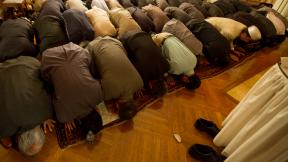
Muslim families spend quality time together during salah, but the conversation shared at mealtime is an opportunity to practice communication and organization. Think of how a town hall is organized – old business of concern, new items to discuss, open forum for discussion, vote. Families can discuss current events in this manner gathering perspectives from all ages. The practice of following an organization structure prepares all members for civic engagement. That elderly Virginia couple – well they went to their town hall in October right there in the small town of Petersburg, Virginia to present their case for neighborhood and community change.
5. Continuous engagement
Transformative restructuring of a society is not limited to voting in an election once a year or every few years, but is a vibrant, consistent and continuous action. Civic engagement and activism is lifelong, generational and continuous engagement rooted in the understanding that service to humanity is an act of righteousness and manifestation of faith. May Allah reward our long-lived Muslim couple for their example, efforts and intentions.
**********************
Author bio: Mahasin D. Shamsid-Deen is the news curator and content manager for Muslim Network TV (MNTV) and contributing writer for Sound Vision. She holds a master’s degree in English writing and has worked as both a High School and College ESL Instructor and Writing Instructor for more than a decade. Mahasin has numerous published articles, books, essays and is a published playwright with three award winning stage plays. She is currently writing her dissertation for her doctoral degree.






Add new comment