
SUMMARY: How Muslim mothers can establish itikaf during the last ten nights of Ramadan.
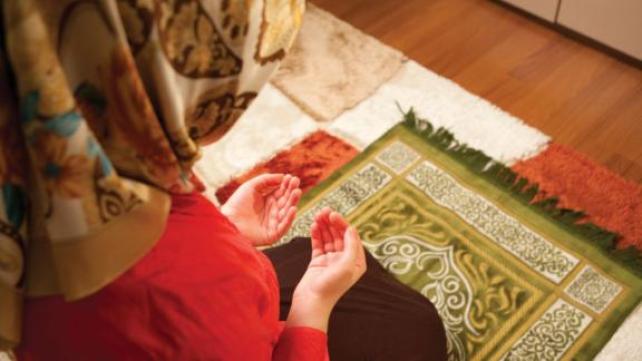
A close friend once told me that her mother used to observe itikaf at home during the last ten nights of Ramadan, and I was intrigued. She described her routine in detail while I listened intently, taking mental notes. Her mother would prepare a designated space in her house, making sure she had everything she needed, like a prayer rug, a small reading nook with a Quran stand, water bottles, light snacks, and dates. By that time, her children were adolescents and could mostly take care of themselves. This devoted mother would meal-prep in advance, knowing exactly how many days she would be away in her intimate retreat with Allah. Once her home was in order and her family prepared, she would close herself in her room to focus on worship. It was something she looked forward to every year. It clearly left a lasting impression on her children, since my friend recalled this part of her mother’s Ramadan routine with admiration.
After hearing this story, I was struck by this mother’s dedication. Before learning more about this sacred practice, I had always assumed that itikaf was something reserved for men. However, the historical record tells a different reality. Itikaf is a devotional practice in which Muslims seclude themselves for a period of time to focus solely on worshipping Allah. Prophet Muhammad, may Allah give him peace and blessings, observed itikaf regularly during the last ten nights of Ramadan, and his wives did as well. According to Aisha, may Allah be pleased with her, after his death, “His wives continued to perform the retreat after him.” (Sahih Bukhari 2026, Sahih Muslim 1172). Unlike my friend’s mother, however, the Prophet’s wives performed itikaf in the masjid. This raised an important question for me: What exactly is itikaf, and must it always take place in the masjid, or can it be done at home? As it turns out, the answer is not as straightforward as one might think.
As I began reading more about the rulings on i’tikaf, I discovered that Muslim scholars have held slightly different views about where it may be performed. The majority of scholars from the Maliki, Shafi, and Hanbali schools of Islamic jurisprudence maintain that itikaf must take place in a masjid, based on the Quranic verse that instructs believers not to approach their spouses “while you are meditating in the mosques” (Quran 2:187), as well as the well-documented practice of the Prophet Muhammad, may Allah give him peace and blessings, and his wives, who observed itikaf in the mosque. The Hanafi school, however, makes an important distinction for women. According to many Hanafi jurists, a woman may observe i’tikaf in the designated prayer space of her home, which is considered more suitable for her circumstances. When I learned this, my friend’s story suddenly made more sense. Since she comes from a South Asian background, where many families traditionally follow the Hanafi school of thought, it is quite possible that her mother’s practice was based on that legal opinion.
Since learning about the differing opinions on i’tikaf, I have come to see it as an opportunity for women to revive a practice observed by the wives of the Prophet Muhammad, may Allah give him peace and blessings be upon him, while drawing closer to Allah. In recent years, some prominent masjids in the United States have started opening their doors for women to experience this form of worship. For example, my local mosque sets aside special nights for mothers and daughters, as well as sisters in general, to spend the evening praying qiyam in the masjid. Even so, it is still relatively uncommon for women to observe the full ten days of Ramadan in itikaf in the mosque.
Considering that Hanafi and Shafi mosques are the most common in the United States according to mosque surveys,1 it is safe to say that some women observe itikaf in the masjid while others dedicate time for worship at home, particularly in households that follow the Hanafi position. Whatever school of thought we follow, the purpose remains the same, and that is to step away from the noise of daily life to focus on our relationship with Allah.
With that in mind, here are a few tips for how moms can prepare for itikaf during the last blessed days and nights of Ramadan.
• Set a clear intention (niyyah).
Begin by renewing your intention to dedicate time to Allah during the last ten nights of Ramadan. Even if your retreat is shorter or interrupted by family responsibilities, the sincerity in your intention will guarantee a reward, in sha Allah.
• Create a small worship space.
Designate a quiet corner of your home (or the masjid) with a prayer rug, Quran, and a few essential items. The wives of the Prophet Muhammad, may Allah give him peace and blessings, used to set up a tent in the masjid, which is a great idea for added privacy. Having a prepared space creates a sense of focus and signals to family members that this is your time for worship.
• Plan ahead for household needs.
We all know the mental fatigue of cooking for a family day in and day out, even while fasting. Preparing simple meals in advance or organizing easy iftar options can reduce stress and allow you to spend more time in prayer, reflection, and recitation.
• Involve your family in the process.
Explain to your children what itikaf is and why these last days and nights of Ramadan are so special. Older children can help with small tasks at home and even assist with caring for younger ones.
• Start with manageable time blocks.
If a full retreat is not possible, dedicate certain hours each night to worship. Even a focused period after tarawih or during the last part of the night can help cultivate the spirit of itikaf while giving you the privacy you need.
• Limit distractions and interactions.
Try to step away from phones, social media, and unnecessary conversations during your dedicated worship time so that your heart and mind can fully engage in remembrance of Allah.
• Focus on meaningful acts of worship.
Use this time for Quran recitation, dhikr, dua, and reflection. Many mothers also keep a journal or small notebook to write personal supplications or reflections from the Quran.
For those interested in learning more, the hadith literature offers a rich description of how the Prophet Muhammad, may Allah give him peace and blessings, observed itikaf and the etiquette associated with this beautiful act of worship. It is also important to remember that itikaf is more than simply attending a special night organized at the masjid for sisters to gather and socialize. While those types of events can be uplifting and beneficial, the essence of i’tikaf is a spiritual treat and retreat for the soul. Many of us would love the chance to take a “staycation” in the House of Allah, but the true goal of this practice is far greater. During the last ten nights of Ramadan, we seek to reach Laylat al-Qadr and to earn Allah’s mercy and forgiveness. Through increased prayer, reflection, and remembrance, we strive to grow in taqwa, and that is the very spirit of Ramadan itself.


Add new comment