
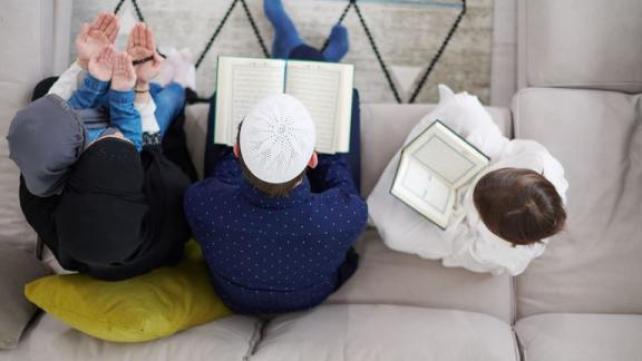
SUMMARY: The Islamic concept of success includes excellence in all endeavours based on reliance and aimed toward the ultimate approval of Allah.
“…and my success is not but through Allah. Upon Him I have relied…” (Quran, 11:88)
In a world that constantly measures success through visible outcomes and public recognition, this powerful ayah recenters the believer’s heart. It reminds us, and our children, that every accomplishment, whether academic or spiritual, is not the product of effort alone, but a gift and facilitation from Allah Almighty. For Muslim parents, this perspective isn’t just theological, it’s foundational to how we nurture our children through their milestones, from graduations to memorizing the Qur’an, from report cards to acts of worship.
Before we teach our children how to succeed, we must first redefine actual success. In the broader culture, success is often reduced to visible outcomes. But in Islam, true success is much deeper and more lasting. True success is earning the pleasure of Allah Almighty, staying firm upon faith, growing in good character, being consistent in acts of worship, and ultimately attaining Paradise.
This doesn’t mean worldly achievements are unimportant. Islam encourages excellence in all areas of life, but these achievements are not the goal - they are tools and opportunities. A child who graduates with top honors but forgets their prayer has not attained true success, while a child who struggles academically but maintains sincerity, patience, and connection with Allah Almighty may, in reality, be far more successful. Teaching this balance helps children understand that success is not a single moment - it’s a lifelong relationship with Allah Almighty.
Success is often framed as a straight path paved with hard work, discipline, and ambition. While Islam encourages excellence and striving, it also teaches us that outcomes are ultimately in Allah Almighty’s control. When a child graduates, earns top marks, or wins recognition, it is easy for them to internalize, “I did this.” As parents, we have the responsibility to gently reshape that narrative by reminding them that Allah Almighty made it easy, that Allah Almighty gave them the ability and focus, and that while we work hard, it is Allah Almighty who blesses the effort. This language plants a lifelong understanding: effort is required, but success is granted.
Graduation ceremonies are emotional and joyous milestones representing years of perseverance, sacrifice, and growth, but they are also moments of spiritual opportunity. Instead of celebrations that center only on worldly achievement, we can incorporate acts of gratitude - beginning gatherings with supplication and gratitude, encouraging our children to pray two units of prayer in thanks, and giving meaningful gifts such as a Qur’an with a personal note about reliance on Allah All-Mighty. In this way, graduation becomes not just the end of an academic chapter, but the strengthening of a spiritual identity rooted in recognizing Allah All-Mighty as the true source of all openings.
High grades and awards can sometimes lead to subtle pride or comparison, where children begin to measure themselves and others through rankings and outcomes. It is important to teach them to pair achievement with humility by reminding them that intelligence is a trust, not a possession, sharing stories of scholars who attributed their knowledge entirely to Allah Almighty, and encouraging them to make supplication for classmates, including those who struggled. A child who says “All praise is due to Allah” after success is protected from arrogance and anchored in sincerity.
While academic success is celebrated, religious milestones deserve even deeper recognition. Completing the memorization of the Qur’an, establishing consistent prayer, or developing strong character are achievements with eternal impact. Yet even here, the same principle applies: success is only through Allah.
Children memorizing the Qur’an may sometimes feel overwhelmed or discouraged, so it is important to remind them that it is not their memory alone—Allah Almighty is placing these words in their heart, that consistency matters more than speed, and that every small step is beloved to Allah Almighty. Celebrating these milestones with intention helps reinforce their spiritual significance.
Reliance on Allah Almighty is not passive but a balance between effort and trust. For students, this means studying diligently while making supplication for understanding, preparing for exams while accepting whatever result Allah Almighty decrees, and setting goals while recognizing that outcomes are always good if Allah All-Mighty wills them. As parents, modeling this balance through our own words and actions teaches children resilience and perspective. A child grounded in reliance on Allah Almighty does not collapse under failure nor become consumed by success.
Children should understand that success is not always what people see, that sometimes Allah All-Knowing withholds something to give something better, and that effort itself is rewarded even when outcomes differ. This is where the message of the ayah becomes even more essential. When they internalize this, they are less likely to feel defined by disappointment and more likely to turn to Allah Almighty with trust.
Ultimately, the goal is not simply to raise successful children in the worldly sense, but to raise believers who recognize Allah Almighty in every chapter of their lives. When a child grows up saying, “I succeeded because Allah Almighty alowed me,” “I will try again because Allah Almighty is with me,” and “I trust Allah Almighty with what I cannot control,” then they have gained something far greater than any certificate or award.
The ayah from Surat Hud (11:88) serves as both a declaration and a mindset, teaching us to strive without becoming self-centered, to achieve without becoming arrogant, and to celebrate without forgetting the One who made it all possible. May our homes be filled with children who succeed with humility, gratitude, and hearts firmly attached to Allah Almighty, and may every milestone they reach bring them closer to Him.
Author bio: Miriam is the proud mother of seven children of different ages, an experience that shapes her perspective on education and advocacy. Based in the Chicagoland area, she has taught in an Islamic school and currently works in a public school, supporting students and families and promoting inclusive learning environments. As the mother of a child with autism, Miriam brings personal insight and compassion to her work advocating for children with diverse learning and developmental needs. She is passionate about fostering inclusion, understanding, and equity within her community.






Add new comment