
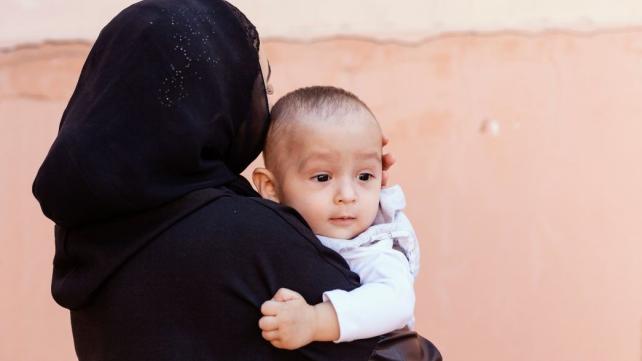
SUMMARY: The perseverance, courage and determination of Islam's first martyr, the socially disadvantaged but characterful Sumayyah bint Harith, is a powerful example to Muslims today and especially to mothers raising upright families.
Times of strife and social discontent are cyclical in man’s history. In the United States, Jim Crow laws enforced racial segregation and discrimination against African Americans from the post-Civil War era until the 1960s, including laws against freedom of movement or assembly, unfair imprisonment and profiling, negative stereotypes, government surveillance, and public dislike of African Americans overall. Although there is a perception that these types of legislated practices have changed, the reality disproves that view. Muslims, especially those who migrated from the Middle East, Africa and Asia have been subjected to policies that infringe upon religious freedom of expression with travel bans, anti-sharia legislation, national security profiling, watch lists and social media monitoring.
Faced with these challenges, Muslim families have to be strong, prepared and resilient. Mothers are the first teachers of children. The Muslim mother has the natural instinct to want to shield her child, but she must equip them to face challenges as well. This can be accomplished by looking at the lives of the early Muslims of the prophet age and learning from their example. One tremendous example comes from Sumayyah bint Khayyat, may Allah be pleased with her. From her story, Muslim mothers can use her example to emulate themselves and teach their children.
A Mother’s Resiliency
The story of Sumayyah bint Khayyat is so important that it has been passed down for fifteen centuries. Sumayyah was the first martyr in Islam.
Sumayyah lived in a society opposed to Islam where she was not free to practice her religion, the Muslims were not able to establish an Islamic state, were persecuted, profiled and reviled by the Quraysh society.
Sumayyah bint Khayat was born in Abyssinia (modern day Ethiopia and Eritrea) and enslaved in the Arabian peninsula where she later gained her freedom. She was married to Yasir ibn Amir and the mother of three sons, Abdullah, Ammar and Harith, whom she was known to have raised to be respectful and of good character. This was a major feat for a woman because, due to her previous station having been enslaved earlier in life, she could have easily instilled resentment, hatred, fear or powerlessness in her sons, but she did not. In fact, it was reported that her oldest sons Ammar and Abdullah was known among the leaders of the Quraysh as men of good character and conduct which made them stand out as youth. Unfortunately, her youngest son Harith was murdered as a child. Even after this tragedy, she did not stroke bitterness of cynicism in her remaining sons.
To contextualize, Sumayyah was an ethnic minority in society, as many Muslims are in the United States and elsewhere. She came from humble beginnings, as may an immigrant from the developing world today. Even though she faced hardship and discrimination, she still felt compelled to raise her sons to be good people whose character was respected raising them in societal esteem. A modern Muslim mother learns that unjust circumstances and unfair laws may negatively impact Muslims, but this fact should never compel a mother to raise angry resentful children. Rather, even as she shares the hardships of raising children in a challenging socio-political climate, her own patience and resiliency is essential to teaching children to be good Muslims and in fact, good people.
Unwavering Faith
When the Prophet Muhammad, may Allah send peace and blessings upon him, began to spread the message of Islam, Sumayyah was one of the first people to accept that call. Sumayyah embraced Islam first, appreciating the idea of Tawheed and rejecting the idolatry of the age. Her husband and sons soon joined her in her new faith and understanding of God. But the Quraysh leaders of the time had no appreciation for this budding religion and the people who accepted it.
At this early stage, Prophet Muhammad, may Allah send peace and blessings upon him, was still under the protection of his uncle Abu Talib ibn Abdul-Muttalib, so the leadership in the tribe of Quraysh sought to put pressure on the converts of the religion to make it unpopular and dangerous. Abu Jahl, a Quraysh leader who opposed the message of Islam, took the time to punish Sumayyah himself. This may have been because she was female, or a minority, or an immigrant, or held no high or powerful status in the society. Whatever his reasoning he threatened her, tried to bribe her, and even tortured her in an attempt to get Sumayyah to renounce her faith.
Sumayyah did not submit to these attempts. No doubt she knew that her resistance was only causing further anger. In such a dire situation, it was permissible in Islam to denounce Islam to save herself. But Sumayyah was a woman of character and unwavering faith. She understood the importance of being an example to her remaining sons of how serious she took her faith. Abu Jahl murdered her, making her the first shaheed in Islam,
"And never think of those who have been killed in the cause of Allah as dead. Rather, they are alive with their Lord, receiving provision." (Quran, 3:169)
To contextualize this, Sumayyah lived in a society that was hostile to Islam, but that fact was not enough to drive her to disbelief. A modern Muslim mother can explain that although Sumayyah made the ultimate statement and sacrifice, the Quran explains the martyrs' new status as living forever in honor under the provision of their Lord.
In addition, mothers can teach that resistance to oppression takes many forms. For example, a Muslim youth can fight to dress modestly, observe Islamic celebrations without school penalty, have their names pronounced correctly or even travel without being detained. This is the modern way youth may stand unwavering against societal attempts to dissuade them from their beliefs.
The key is for mothers to teach their children that Muslims of the prophetic age like Sumayyah were resolute in their belief under the harshest and most extreme circumstances, making any modern challenges more manageable.
Author bio: Mahasin D. Shamsid-Deen is the news curator and content manager for Muslim Network TV (MNTV) and contributing writer for Sound Vision. She holds a Master in English Writing and has worked as both a High School and College ESL Instructor and Writing Instructor for more than a decade. Mahasin has numerous published articles, books, essays and is a published playwright with three award winning stage plays. She currently has a screenplay script under consideration.
Related:
(1) Responding to Genocide as a Family: Faith, Family, and Advocacy
(2) Loving how the Prophetic Example informs Response to ongoing National Guard Overreach






Add new comment