
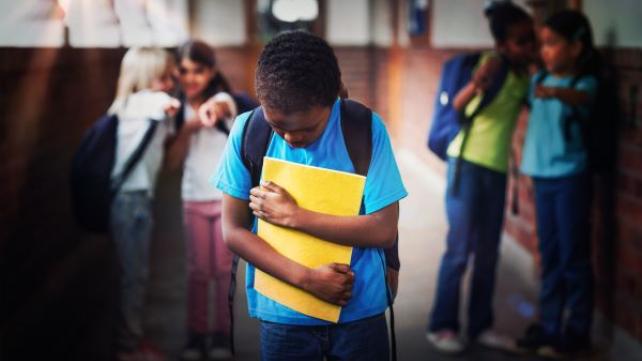
Your son comes home from school quietly. At dinner he pushes his rice around the plate. Then, without looking up, he says, "A boy at recess kept saying, 'Hello, Muhammad,' and everybody laughed."
Many Muslim parents may hear something like this in the next few weeks. On October 16, the President joked at a rally that if you are not sure of a Middle Eastern person's name, "just say 'Mohammad.'" Jokes from the top get repeated on the playground. In Texas, children may soon open social studies lessons that call the Prophet Muhammad "brutal," God's blessings be upon him. [Add here that these incident help build Islamophobic environment which impacts children in a unique way]
Our children did not ask for any of this. But they will face it, and they need us ready.
This article draws on advice from people who work on bullying every day: school counselors, child educators, and anti-bullying programs. Their message is simple. Children handle hurtful words much better when a calm, loving adult has prepared them ahead of time.
48% Muslim children are bullied:
Bullying is more common than most parents think. In the 2022 American Muslim Poll by the Institute for Social Policy and Understanding, 48 percent of Muslim families with school-age children reported a religion-based bullying incident in the past year. About one in five said it happened nearly every school day. Some of it came from adults at school, not only from other students.
So do not wait for your child to bring it up. Many children never do.
First, what bullying experts want parents to know
- Children often hide it. They worry they will lose friends, get pulled out of school, or be told it is no big deal. Some blame themselves.
- Watch for signs. Stomachaches on school mornings. Not wanting to go to school or to a certain class. Pulling away from friends. Getting upset over small things.
- Your face matters more than your words. If you explode, your child learns that telling you causes trouble. Stay calm, even if you are angry inside.
- Believe your child. Say, "Thank you for telling me. You did the right thing." Then ask, "What happened next?"
- Do not promise to keep it secret. Promise instead that you will not do anything without talking to them first.
- Practice beats lectures. Children remember what they rehearse, not what they are told once.
Tips for young children (ages 4 to 7)
- Start with love, not fear. Before talking about mean jokes, talk about who the Prophet was. Tell them how he carried his grandsons Hasan and Husain on his shoulders, and how he let them climb on his back while he prayed. Small children connect to a Prophet who loved children, God's blessings be upon him.
- Keep it short and simple. "Some people say unkind things about the Prophet's name because they don't know him. We know him, and we love him, God's blessings be upon him."
- Give them one sentence to say. "That's not nice. Stop." Practice it with a puppet or a stuffed animal.
- Teach them to tell. Make sure they know which grown-up at school they can go to, and that telling is not tattling.
Tips for children ages 8 to 12
This is the age when teasing about names and faith often starts.
- Role-play at the kitchen table. You play the teaser. Your child practices: look at the person, say it in a strong, calm voice, then walk away. Switch roles. Make it a little funny so it does not feel scary.
- Give them words that work. Short and calm is best: "My name means 'the praised one.' Please say it right." Or: "That's not funny." Or simply: "Stop. I don't like that."
- Use the buddy system. Bullies usually pick on children who are alone. Help your child stay near friends at lunch, recess, and on the bus.
- Tell the true story. The people of Makkah who hated the Prophet would not say his name. They twisted it into Mudhammam, "the blamed one." He told his companions not to worry, because their curses were aimed at someone else. His name was Muhammad, "the praised one" (Bukhari). Children love this story because the Prophet answered with calm, not anger, and the insult missed. God's blessings be upon the Prophet.
- Share the story of Taif. When the Prophet went to the town of Taif to share his message, people threw stones at him. When an angel offered to crush the town, he refused. He hoped that their children would one day worship God (Bukhari). Explain that forgiving does not mean staying silent. The Prophet still left that place, and your child can forgive and still tell a teacher. God's blessings be upon the Prophet.
Tips for teenagers
Teens can see the bigger picture, and they need to talk about it.
- Ask before you tell. "What are kids at school saying about the rally joke?" Let them talk. Teens shut down when parents give speeches.
- Talk about the news honestly. Explain how a joke at a rally and a school lesson calling the Prophet "brutal" are connected, God's blessings be upon him. Both make Muslims look like outsiders. Help them see it as a pattern, so they do not take it personally.
- Model respect while disagreeing. We can strongly reject what a leader says without hating the person. Teens are watching how we talk about the President at home.
- Prepare for the classroom. If a teacher or textbook calls him "brutal," your teen can raise a hand and say, "Muslims see him very differently. Can I share another view?" Then they should tell you, and you should follow up with the teacher.
- Turn hurt into action. Encourage them to write a school newspaper piece, join or start a Muslim Student Association, or invite a friend to an open house at the masjid.
- Watch "The Greatest" together. This new Prime Video series about Muhammad Ali starts November 4, 2026. People mocked his new name too, and he kept it. Preview it first if you have younger children in the room.
Make the Prophet come alive at home
A child who knows and loves the Prophet will not be easily shaken by a joke about him, God's blessings be upon him. Sound Vision's "7 Ideas to Make the Prophet Muhammad Come Alive for Your Children" has simple ways to build that love:
- Storytelling night. Each family member picks one story from the Prophet's life and tells it. Bedtime and long car rides work well.
- Play like him. He raced with his wife Aisha, and she often won. Have a family race in the backyard or the park.
- Travel with him. Trace his journeys on a map of Arabia, from Makkah to Madinah to Taif.
- Eat like him. Have a dinner of foods he liked, and practice his manners at the table.
Another Sound Vision article, "Bringing the Seerah Into Family Life," reminds parents that children learn most from daily example. When we are gentle, patient, and kind at home, our children see the Prophet's character, not just hear about it. God's blessings be upon him.
If your child's name is Muhammad
Tell your child why you chose the name. Tell the story of the day they were born. In "Why I Named My Child Muhammad," the writer Wendy Díaz says she wanted her son to carry one of the finest names a child can have, and to give her relatives a reason to ask about Islam. Your child should know that their name is a gift, not a burden. Never shorten or change it to avoid teasing unless your child wants that.
When to go to the school
- Write it down. Note the date, what was said, who said it, and who saw it.
- Meet the teacher or counselor. Stay calm and stick to facts. Ask, "What will the school do, and when will you follow up with me?"
- Ask for the anti-bullying policy in writing. Every state has anti-bullying laws, and federal civil rights laws also protect students.
- Go higher if needed. If nothing changes, write to the principal and the district. You can also report incidents to CAIR, which tracks them.
- Check in with your child every few days. Bullying rarely stops after one meeting.
Teach the other side, too
Our children should never be the ones who mock. The Quran says, "Do not defame one another, nor call each other by offensive nicknames." (Quran 49:11) Teach your children to stand up for any classmate who is teased, whether for a name, a skin color, a disability, or a faith. A child who defends others is learning to live like the Prophet, God's blessings be upon him.
A final thought
A joke from a stage can travel to a playground in one day. So can a loving word from a parent. When your child comes home hurt, the most important thing is not having the perfect answer. It is a calm, safe place where they can ask questions.







Add new comment