
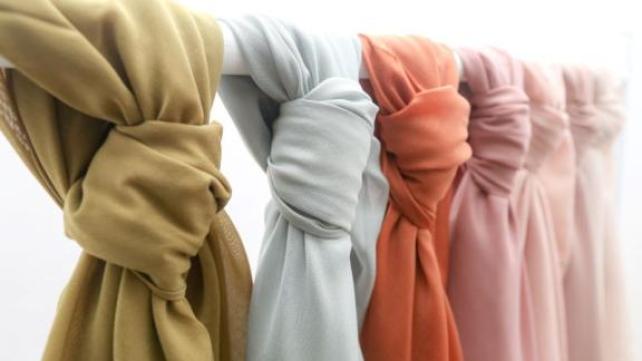
SUMMARY: Interviews with American Muslimahs on World Hijab Day.
World Hijab Day started in 2013 by Nazma Khan as an innovative dawah and effort to promote religious tolerance. On this day women from all backgrounds are invited to wear hijab in solidarity with Muslim women. Below are reflections on the hijab by a representative cross section of American Muslimah.
Senior grandmother
When I came to Islam in the late 1960s, covering my hair was part of the new transformation. In the Black community people could tell you were Muslim because you covered your hair. They didn’t necessarily know what kind of Muslim you were meaning whether you were Nation, Ansari, or whatever, but I don’t want to get into that. A Muslim woman covering our hair was identity, religious expression and our attempt to submit to the will of Allah. We didn’t experience any stress adopting the scarf.
At work we’d let our employer know up front – we were Muslim, this is what we Muslims wear. The hijab was more than modest dress it was self-restraint and good behavior. People associated our feminine reserve with Islam.
We were serious about practicing Islam right back then, so we laid the foundation for sisters nowadays to work in hijab. And yeah, that might mean we took an employer to HR or even to court. In the late 70s I remember a sister in Phoenix who was a lawyer herself who won the case to cover her hair. In the mid-80s a sister in Illinois Chicago area was told since she was a Social Worker that her hijab scarf was a distraction. She used it to her advantage when entering the home of clients. Her ‘hijab’ was a protection and people responded as much to her Muslimness as they did to her Social Worker position.
You know we didn’t even use the word hijab really – we just said scarf. It wasn’t a thing as young people say. Sometimes we would say ‘khimar’ amongst each other. As Americans it never occurred to us to make this simple piece of cloth something foreign, so we used the language that the people understood, and it worked. The scarf was not hated or feared. In the Black community it immediately identified us as Muslims, but in the larger community people seemed to think it was just part of our outfit. (laugh). I never had a problem, never questioned it and certainly never saw it as a burden – hijab was for us believers - it was a distinctly faithful practice for a Muslim woman.
Middle aged – mother – immigrant to US
I didn’t wear the hijab in my country. It was something for the older ladies and my family was only semi-religious. Of course, I would wear it for a religious event like the Eid. There were a lot of Christians in Beirut and that may have impacted our overall attitude without us really thinking about it. In fact, now that I reflect it’s funny how just because my family was sort of well-to-do that I unconsciously ascribed hijab as less modern or progressive, rather than looking at it in any spiritual manner.
But I did adopt the hijab when I came to the United States. First, the other women I was around initially were all hijabi and I had to reassess my own Iman. I had always thought of myself as a good Muslim but not dwelled on what it was that was making me so. My husband took a job at University and I was torn between expressing my faith and compromising him in his new position. So I wore hijab to the masjid and Islamic events and not at any public or social affair with non-Muslims. I had sons so there was no girl staring me in the face accusingly.
To be honest I didn’t go to the masjid that much back home. But as my boys grew older and were enrolled in weekend school and youth group activities, I found myself at masjid more which meant I was wearing hijab more. Then I found myself wearing hijab when taking my sons to school, or to soccer games or other activities especially if their non-Muslim friends were going to be there.
My boys were representing themselves as young Muslims post 9/11 and so I did too. I adopted the hijab gradually and really in a quiet, natural way as my knowledge of Islam grew and I was deliberate in being a good Muslim. I wouldn’t say it was a struggle, but I think the controversy over hijab here took me through a series of stages. First, I was burdened by it, then defensive since Muslim women were being discriminated against just because they wore it, and then appreciative of it because to defend meant I had to learn and contextualize the purpose of hijab in Islam.
Unmarried, college student
Oh my God!
In high school I gotta say I was indifferent. Nana thought it was scandalous if I went out without hijab. But it wasn’t because I didn’t like it or thought it was oppressive. I wore hijab, but sometimes it was just in the way. Somebody always had to ask what or why I had it on and I had other things on my mind other than explaining myself. Everybody knows about hijab, knows Muslims wear it and know its part of our religion so asking question about it seemed like trying to goad me or something. I remember a school friend focusing on my hijab even over the rather intricate threadwork on my shalwar kameez. I was like ‘Dude! – really?
The older I get; I’m less bothered by it. Now I have all kinds of cute ways to wrap hijab and find taupe is my go-to color when rushing off to class. I don’t look down on anyone who doesn’t wear hijab.
I think wearing hijab is a very personal thing and people express their faith in their own way. For me, hijab is identity. It’s faith. It’s pleasing to Allah. It’s me and I’m comfortable in my hijab.
7 and half year old
When I put on my hijab I feel nice. I am ready to go. I like wearing hijab.





Add new comment