

SUMMARY: Purification through ablution and its virtues for the Muslim.
Ramadan is the time of purification of the soul (tazkiyah) and enhanced consciousness (taqwa) of God. It is during this month that the collective body of Muslims (ummah) are united in their devotion to Allah The Most High and abstain from our natural desires of food and drink thus strengthening our self-discipline and connection with Allah through increased worship (ibadah) and du’a for forgiveness. Thus, Ramadan purifies our mind, soul and body.
Islam as a way of life offers endless opportunities for mankind to please Allah. Wudu is very much like Ramadan because wudu is a profound act that extends beyond refreshing ourselves and more to being an act of purification of body and soul. When we make wudu, we should be as intentional as we are during Ramadan when we make the intention to fast. Wudu should be a focused intention and act, and the first step of the Ibadah where we beg Allah for forgiveness.
Just as Ramadan is a purification of the soul, has both physical and spiritual benefit and involves increase in acts of ibadah the wudu that we perform for each prayer has similar qualities. When we perform and strive to perfect our wudu we are preparing, sweetening that which will identify us as followers of the Prophet Muhammad (ﷺ) on the day of judgement.
Nuaim Mujmir narrated, "Once I went up the roof of the mosque with Abu Huraira. He performed ablution and said, 'I heard the Prophet (ﷺ) saying, "On the Day of Resurrection, my followers will be called "Al-Ghurr-ul- Muhajjalun" [bright-faced with white markings] from the trace of ablution and whoever can increase the area of his radiance should do so [i.e. by performing ablution regularly]."'"
(Sahih Al Bukhari 136, Book 4, Hadith 2)
"Ghurran Muhajjalin":is an Arabic phrase referencing horses with white markings on their faces and legs. This description is symbolic of how the followers of Muhammad (SAW) will be recognized as different from the crowd, in this metaphor horses with white markings distinguishing them from the monocolored horses.
Wudu is essential and significant both spiritually and physically, it is tied to the salah which really makes it an essential part of our ibadah, and we can do acts with our wudu that enhance it in degree.
From a physical perspective each part of wudu is valuable to the human being:
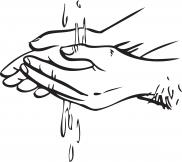
- Washing hands cleans from germs
- Rinsing mouth is good oral hygiene
- Rinsing nose eliminates germs in sinus
- Washing face nurtures skin and removes dirt,
- Washing hands to elbow cleans and increases blood circulation
- Wiping head and ear removes dirt and brightens face and hearing
- Washing feet promotes blood circulation
But each of these acts performed in wudu are symbolic with deep meaning as reported by the sayings and example of Prophet Muhammad (ﷺ):
Abu Huraira reported that Allah's Messenger (ﷺ) said: "When a servant, a Muslim or a believer, washes his face [in the course of ablution], every sin he contemplated with his eyes, will be washed away from his face along with water, or with the last drop of water; when he washes his hands, every sin they wrought will be effaced from his hands with the water, or with the last drop of water; and when he washes his feet, every sin towards which his feet have walked will be washed away with the water or with the last drop of water with the result that he comes out pure from all sins." (Sahih Muslim 244, Book 2, Hadith 44)
- Washing hands symbolizes washing way bad actions
- Rinsing the mouth symbolizes washing away bad speech and harmful words
- Rinsing the nose symbolizes washing away bad things ingested or took in to your being
- Washing the face symbolizes purifying the soul
- Washing the hands to elbows symbolizes washing away bad deeds and fitnah
- Wiping the head and ears symbolizes clearing bad thoughts and untruths heard
- Washing the feet symbolizes cleaning away bad deeds towards which you incline
Since wudu is linked to the salah, we can understand that Allah Subhanahu Wa Taala is teaching us in the Quran to come to prayer in a state of submission – washing away the worldliness that has consumed and stained us. Cleanse your soul, wash away your bad acts, clear your mind and wipe away those bad things you have deliberately moved towards. Similar to what we feel completing the fast of Ramadan offers us.
"O you who believe! When you rise to perform prayer, wash your faces and your forearms to the elbows, and wipe over your heads and [wash] your feet to the ankles". (Quran, 5:6)
Since wudu is an integral act of devotion, we can enhance it by degrees by coming to it with sincere intention, perfecting the act and bearing witness.
Umar ibn Khattab said, "The Messenger of Allah (ﷺ) said: 'Whoever performs Wudu' and does it well, then says: "I bear witness that there is none worthy of worship except Allah, and I bear witness that Muhammad is his slave and Messenger," eight gates of Paradise will be opened for him, and he may enter through whichever one he wishes.'” (Sunan Nasai 148, Book 1, Hadith 149)
Author bio: Mahasin D. Shamsid-Deen is the news curator and content manager for Muslim Network TV (MNTV) and contributing writer for Sound Vision. She holds a Master’s degree in English Writing and has worked as both a High School and College ESL Instructor and Writing Instructor for more than a decade. Mahasin has numerous published articles, books, essays and is a published playwright with three award winning stage plays. She is currently writing her dissertation for her doctoral degree


Add new comment