
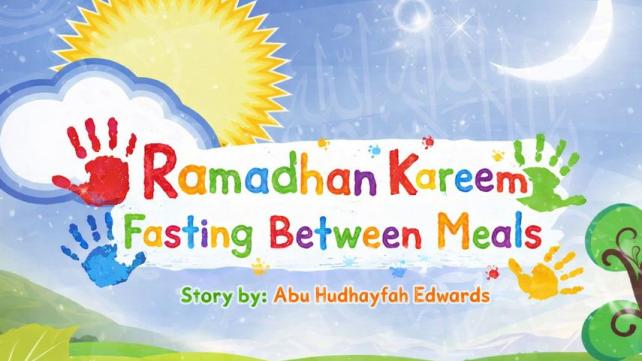
Saeed thought he understood patience.
He had owned and operated a Mediterranean grocery store for nearly thirty years. He had dealt with late deliveries, broken freezers, customers arguing over olive oil brands, and one memorable incident involving a goat that definitely did not belong in the parking lot. He believed~truly believed~that nothing could surprise him anymore.
Then he retired.
Or rather, he sold the store, shook hands with the new owner, and walked into what he thought would be a quiet chapter of life.
He was wrong.
Saeed and his wife Maryam were empty nesters. Their children were grown, married, scattered across states and careers, calling just often enough to remind them that time had moved on, whether they liked it or not. The house felt too big now. Too quiet. Too still.
Maryam, a retired educator who had spent decades teaching children with calm authority and an endless well of mercy, had an idea.
“Why don’t we open an Islamic daycare?” she said one afternoon, pouring tea as if she were suggesting a short walk.
Saeed blinked. “A… daycare?”
“Yes,” Maryam replied, smiling. “We already have the space. And the community needs it.”
Saeed looked around the house. He imagined juice spills. Crumbs. Noise. Small shoes everywhere.
But Maryam was already planning. One wing of the house was redesigned. Safety gates installed. Colorful rugs laid down. Shelves filled with books about animals, prophets, and good manners. Tiny chairs appeared, then tiny tables, then toys that somehow multiplied overnight.
Maryam was fully in her element.
Sa’eed was not.
Seeing this, Maryam took mercy on him.
“I’ll take the toddlers,” she said gently. “The two and three-year-olds. You can handle the four and five-year-olds.”
Saeed nodded slowly. Four and five sounded… manageable. They talked. They understood things. How hard could it be?
Ramadhan arrived not long after the daycare opened.
Every morning, Saeed stood at the door for drop-off. He greeted parents with warm salaams, accepted lunch boxes and snack bags, carefully labeling each one. He listened to instructions about allergies, nap preferences, and very serious warnings like, “He only drinks from the blue cup.”
The children piled in behind their parents like small tornadoes of energy.
“Maasalaama!” Saeed said cheerfully. “Come in, come in.”
Once Ramadan began, one little girl with braids and a very serious expression looked up at him.
“Why aren’t you fasting?” she asked.
Saeed paused. “I… am fasting,” he said, confused but polite. “Alhamdulillaah.”
The room went quiet for half a second.
Then all the children responded at once.
“And so are we!”
Saeed blinked again. “You are?”
“Yes!” they said proudly.
Saeed smiled. “Ma sha Allah.”
Snack time arrived faster than he expected.
Saeed assumed, incorrectly, that this would be a calm period. Maybe the children would play while he sat quietly and reflected. Maybe he would sip some imaginary tea in his imagination.
Not a chance.
“Snack time!” one child announced.
“Where are our snacks?” another demanded.
“Mine has apples!”
“Mine has crackers!”
“My mom said I have to eat it!”
Saeed felt his stomach tighten with guilt.
Of course. They were children. It was Ramadan, but they were children. He rushed to the storage area, grabbed the snacks, and handed them out one by one like he was distributing treasures.
The room filled with chewing sounds, crumbs, and happiness.
Saeed quietly gathered wrappers and napkins, tossing them into the trash.
A little boy narrowed his eyes at him.
“You said you were fasting.”
“I am,” Saeed replied patiently. “I’m just throwing away the trash.”
The boy nodded slowly, unconvinced but willing to let it go.
The morning passed smoothly. They colored. They sang nasheeds. One child tried to lead the others in prayer but forgot the words halfway through and sat down dramatically.
Then came lunchtime.
Saeed got ready to line up the lunch boxes.
“You’re not going to forget our lunch, right?” a child asked.
“No,” Saeed promised. “I won’t forget.”
“You promise?”
“I promise.”
He kept his word. He opened containers, passed out sandwiches, cut fruit, and poured water.
As the children ate, the questions returned.
“I thought you said you were fasting?”
“Why are you touching our food?”
“If you’re fasting, why are you here?”
Saeed tried to answer calmly, but something finally snapped, softly, humorously, and completely.
Saeed informed the children with a touch of sarcasm, “ I am fasting, but I thought you all said you were fasting too!”
One child looked up, crumbs on their chin.
“We are,” they said confidently.
“Yes,” another added. “We’re fasting.”
Saeed raised an eyebrow. “You are?”
They nodded together.
“We’re fasting,” one clarified proudly, “between meals.”
For a moment, Sa’eed stared at them. Then instantly began laughing.
Not a polite chuckle. A full, deep, belly laugh that echoed down the hallway.
The children froze.
The laughter rolled through him, loud enough that it nearly woke the toddlers down the hallway.
Maryam came rushing in, concern written all over her face. “What happened? Is everyone okay?”
Saeed could barely speak. He gestured toward the children.
“They’re fasting,” he said between laughs. “Between meals.”
Maryam looked at the children. The children looked back, proud and serious.
Saeed explained what happened, and Maryam laughed too.
They hadn’t laughed like that together in years. Not since their early days of marriage, when life was busy but light, and joy came easily.
That evening, after the house was quiet again, Saeed picked up his phone and called an old contact.
“Remember my sign guy?” he told Maryam. “From the grocery store days?”
The next week, a sign arrived.
It read:
“Ramadan Kareem… Fasting Between Meals.”
Saeed hung it proudly in the daycare.
And every Ramadan after that, the sign went up again, reminding everyone that faith grows in stages, laughter is a mercy, and sometimes the most honest fasting is exactly between meals.
……………………
Author bio: Abu Hudhayfah Edwards is an author of Islamic children’s books dedicated to amplifying the voices and experiences of young Muslims living in the USA and Canada. As the creator of WKTL Radio, also known as IslamLife Radio, and Medina Educational Institute (MEI), he channels his passion for education and community into engaging stories that reflect the cultural styles and realities of Muslim youth. Once featured in Style Weekly in the article “After These Messages,” where he was described as “stoic and deep thinking,” Abu Hudhayfah Edwards continues to write with purpose and vision, committed to ensuring that Muslim children see themselves represented in the books they read.




Comments
I laughed too :)
I laughed too :)
Location
We appreciate you
Jazak’Allaah Khayr. ; )
Location
Add new comment