
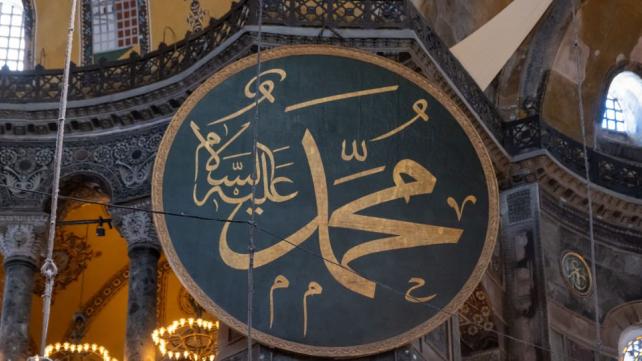
SUMMARY: Amid a climate of increasing persecution in the United States, Muslims must recall the example of Prophet Muhammad, may Allah send peace and blessings upon him, and remain steadfast on their beliefs and patient in the current climate, knowing their rights and standing against injustice.
The month of Rabi al-Awwal is a time for Muslims to reflect upon the Mercy and Blessings that Allah bestowed upon humanity, especially by giving inspiration to Prophet Muhammad, may Allah send peace and blessings upon him. It was during the month of Rabi-al-Awwal that the prophet was born, passed away and made hijrah from Makkah to Madinah, may Allah send peace and blessings upon him. Even though Rabia-al-Awwal is not one of the sacred months in Islam, these major events make it worthy of note and remembrance.
In the seerah we have accounts of his life, including his challenges and successes. Allah, as Al-Wadud, The Loving, blessed us with the example and experiences of Prophet Muhammad, may Allah send peace and blessings upon him, that we can refer to as lived guidance for our lives and affairs. During times of societal strife, the hardships endured by the early Muslims under the leadership of the Prophet, may Allah send peace and blessings upon him, serve as both examples and reassurances to the modern Muslim of how to respond to current affairs.
As Muslims in America grow concerned with governmental policies that may have a negative impact on them as a religious minority as well at them as ethnic minorities and immigrants, we are reminded that oppression by the state has existed in every society. During the prophetic age, the Quraysh tribe found the new teachings of the oneness of God that His Prophet, may Allah send peace and blessings upon him, brought to be an intolerable message. Besides going against societal beliefs, it seemed bad for business. The early Muslims in Makkah were subjected to the worst oppression. They were shunned and basically blacklisted in society, presented as a problem. The economic boycott imposed by the Quraysh was also devastating. When we look at seerah we see that this persecution escalated to the torture and murder of Muslims, the greatest trial indeed.
Oppressive policies and decrees from the state are always distressing. In the current political environment of the United States, we see the government overreach with the establishment of military groups in Washington, DC and a projection to expand into other cities. The National Guard presence is touted as peace keeping and curbing crime, but recent media reports reveal that the National Guard is also engaged in immigrant enforcement operations. This targeting of immigrants began with National Guard troops in Los Angeles for what was really a small protest and is now being floated as a means to curb immigrant presence in Chicago and perhaps Texas. Anti-immigration and discrimination towards religious, racial, national origin minorities in the United States typically go hand in hand and have escalated into violence: “Bloody Monday” riots against Catholic immigrants in 1855, Chinese immigrant massacres of 1871, New Orleans Italian lynchings in 1871, not to mention the systemic racism against people of African descent.
Muslims are disheartened by the current xenophobia, but we understand that oppression is a disliked thing that we ourselves should never accept.
"Allah does not love the oppressors." (Quran, 3:140)
"And think not that Allah is unaware of what the oppressors do. He only grants them respite until the day the eyes will stare in horror." (Quran, 14:42)
The Prophet, may Allah send peace and blessings upon him, told us in a Hadith Qudsi that Allah says, “O My slaves, I have forbidden injustice to Myself and I have forbidden it amongst you, so do not wrong one another.” (Muslim) American Muslims must respond with the same patience that we found in the example of Prophet Muhammad, may Allah send peace and blessings upon him.
There are also logical and safe ways to respond to oppression. There is no way to know if friends, family members or who the next immigrant or minority group will be targeted and approached by the federal troops or the police during this time, but there are helpful ways to respond.
- MAKE DUA – Know that Allah is in charge of everything
- Know community resources and civil rights organizations in your area. Keep their phone number handy.
- Know your rights as an American citizens
- Stay calm and listen intently to what is being said. This is important so there can be no accusations of obstruction or resistance that can cause an encounter to escalate.
- If approached by the police or the National Guard, the Fifth Amendment allows one to remain silent and not increment themselves.
- Do not provide false information. If your immigration status or the status of someone with you is questionable it is better to remain silent.
- It is legal to record. This is protected by the First Amendment, so if approached a video record of the conversation and actions can be made as long as the it doesn’t ‘interfere’ with their enforcement.
Author bio: Mahasin D. Shamsid-Deen is the news curator and content manager for Muslim Network TV (MNTV) and contributing writer for Sound Vision. She holds a master’s degree in English writing and has worked as both a High School and College ESL Instructor and Writing Instructor for more than a decade. Mahasin has numerous published articles, books, essays and is a published playwright with three award winning stage plays. She is currently writing her dissertation for her doctoral degree.




Comments
islamic education
This article offers a deeply thoughtful reflection on how the Seerah serves as both solace and guidance when communities face oppression. Drawing strength from the ways the Prophet (SAW) and early Muslims responded to severe trials reminds us: our resilience doesn't mean resignation—it’s rooted in faith, wisdom, and strategic action.
Location
Add new comment