
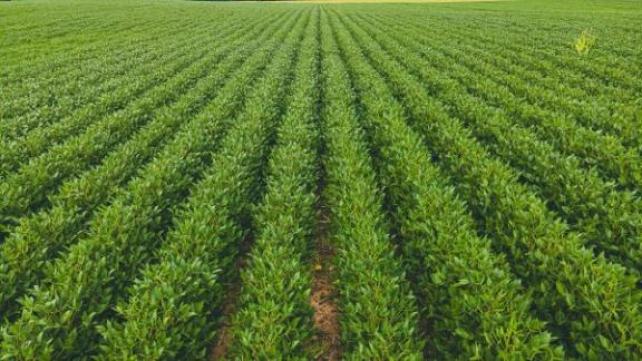
SUMMARY: Reflecting on trees and plants teaches us about the natural order of things, submission to and reliance on Allah. These natural marvels are grown and cherished by the decree of the Creator on whom everything relies.
What Trees and Plants Reveal About Order, Provision, and Submission
Step outside after rain.
Not a storm that terrifies, just a steady, quiet rain. The kind that sinks into the soil without announcement. Return a day later and something has changed. What was dull has color. What was still has movement. What looked finished was only waiting.
The Quran calls our attention to this moment:
“You see the earth barren, but when We send down water upon it, it stirs and swells and grows of every beautiful kind.” (22:5)
Not grows randomly. Not grows chaotically.
Grows… of every beautiful kind.
Observation: The Same Water, Different Results
Walk through any garden, any field, any neglected lot behind an apartment complex.
Same rain.
Same soil.
Same sun.
Yet one plant produces sweetness. Another bitterness. One stretches tall. Another spreads low. One feeds. Another heals. Another harms.
The Quran sharpens this observation:
“…watered with the same water, yet We make some of them exceed others in taste.” (13:4)
This is not just agriculture. This is instruction.
Difference is not always about what is given.
It is about what is made to come forth.
Reflection: What Is Programmed Into Creation
Modern study calls it phototropism: plants bending toward light.
It calls it gravitropism: roots driving downward into the earth.
No eyes.
No brain.
No conscious thought.
Yet every plant knows:
Where to go.
What to seek.
How to survive.
The Quran does not name the mechanism. It directs attention to the Designer.
“And the stars and the trees prostrate.” (55:6)
Sujoud (prostration) is not limited to what we perform.
It is a universal condition of obedience.
The tree does not resist the pull of gravity.
The stem does not argue with the direction of light.
The root does not rebel against its role in the darkness.
Each part fulfills its command perfectly.
Provision Without Noise
Consider the foods listed plainly in the Quran (80:24-30:
Habb (grain)
Inab (grapes)
Qadba (greens)
Zaitoun (olives)
Nakhl (date palms)
Hadaiq (gardens)
No marketing, no branding.
No human intervention required for their أصل (asl, or origin).
They are placed into the system of provision long before we arrive to consume them.
Even in moments of distress, provision is near.
When Maryam Bint Imran, Peace be upon her and her son Isa Bin Maryam, was alone and exhausted, she was told:
“And shake the trunk of this palm tree [nakhla] towards you, it will drop fresh, ripe dates upon you." (Quran, 19:25)
Not a miracle without effort.
Not effort without provision.
A balance.
The Silent Discipline of Trees
Trees do not rush.
They do not abandon their growth halfway through the season.
They do not compare their fruit to the one beside them.
They remain.
Rooted.
Consistent.
Responsive to what reaches them.
Light comes… they turn.
Water comes… they absorb.
Dryness comes… they endure.
This is not passivity. This is precision.
Reflection: The Human Contrast
The same system surrounds us.
We receive:
Knowledge.
Opportunity.
Guidance.
Reminder.
Yet unlike the tree, we hesitate.
We resist direction.
We ignore what we are drawn toward.
We overcomplicate what is already clear.
The plant bends toward light immediately.
We debate whether to move at all.
The Quran’s Subtle Argument
The Quran does not overwhelm with complexity here. It repeats simple scenes:
Rain falls.
Earth responds.
Plants grow.
Again and again.
Why?
Because the evidence is not hidden. It is repeated until it is undeniable.
"Eat of the fruit they bear and pay the dues at harvest, but do not waste." (Quran, 6:141)
Even consumption is governed.
Not just what is provided, but how it is used.
Action: What Do We Take From This?
1. Move Toward What Benefits You
Plants do not hesitate to seek light.
You already know what your “light” is:
Beneficial knowledge.
Good company.
Acts that bring you closer to the Pleasure of Allah.
Stop delaying movement.
2. Accept Your Role and Grow Within It
The root does not envy the leaf.
The leaf does not attempt to become the root.
Each fulfills its function with excellence.
Your role: parent, student, worker, builder, has its own space for growth.
Stay in it. Grow in it.
3. Respond to What You Are Given
Rain comes, the الأرض (arḍ: land, earth) responds immediately.
What do you do when reminders reach you?
A verse.
A lecture.
A moment of clarity.
Do not let it pass like water off hardened ground.
4. Practice Restraint
Do not waste.
Not food.
Not time.
Not opportunity.
Excess is not a sign of blessing. It is often a sign of imbalance.
Closing
A seed splits open beneath the soil.
No announcement.
No audience.
It pushes downward before it rises upward.
It anchors before it displays.
And when it finally breaks the surface, it already knows where the light is.
Not because it discovered it.
Because it was created to seek it.
The question is not whether guidance exists.
It is whether we will respond to it with the same certainty as a plant that has never seen the sun, yet never fails to grow toward it.
Related:
(1) Dua beneath the Sky: Remembering the Creator through His Creation







Add new comment