
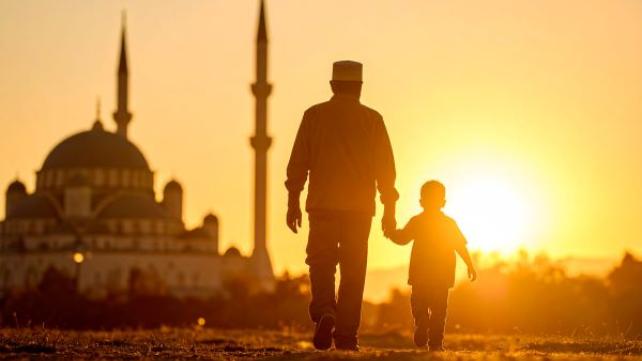
When the attacks on the World Trade Center occurred on September 11, 2001, I was only twenty-one years old. I was still a single college student living with my parents, but I had taken a gap year to work at a doctor’s office. I converted to Islam a year before, and I was only just getting grounded in my faith. The first few years at university were filled with uncertainty. I had no idea what career path to follow or where I would end up in life, but I had Islam, and that was all that mattered at the time. My employers were Muslim, and because I worked for them, my parents allowed me to wear hijab regularly. In the grand scheme of things, I had no worries other than helping my non-Muslim family understand my religion.
The Day Everything Changed
Little did I know that the morning of September 11th would change everything. That day, my non-Muslim coworkers and I watched the attacks live on the television set in the waiting room of the Muslim couple’s internal medicine office as the last patients scurried out before we closed early. The United States was under attack, and we watched it unfold minute by minute. Rumors quickly spread that Muslims were involved and that terrorist cells had infiltrated the nation. Even at that very moment, I felt my coworker’s eyes flash towards me in contempt.
My world came crashing down in more ways than one. I had grown up as an Army brat; my father and brother were both in the U.S. military, and we lived just outside the base where my father was stationed. Any prospect of war meant my family could be torn apart and my loved ones’ lives put directly in danger. Even more frightening was the possibility that Muslims were involved and what that would mean for my faith community. My fears materialized quickly when my brother was deployed to Iraq for the so-called “War on Terror,” my father was transferred to another location abroad, and my religion was put on trial. Islamophobia was not new to the Western world, but after 9/11 it became normalized.
The days, weeks, months, and years that followed were filled with uncertainty as Muslims were increasingly met with hostility and suspicion. Anyone who appeared Muslim became a potential target for harassment or hate crimes, with hijab-wearing women disproportionately bearing the brunt of that backlash. News outlets amplified fears by repeatedly warning of “terrorists hiding in plain sight,” suggesting that danger lurked within our own communities and that some sinister plot against American freedom was always imminent. Out of concern for my safety, my parents asked me to abandon the hijab, conceal my faith, and reconsider my way of life. When I feared I would lose myself, I decided to finish my undergraduate studies in another state and moved in with a Muslim friend and her family. It was at this point that I understood I needed to get married and establish a Muslim home where I could practice Islam freely.
Building a Muslim Home Among the Chaos
Finding a suitable husband as a convert was a challenge I was not ready for. It took years of searching, broken engagements, heartbreak, and prayer to finally find the person who would become my spouse. But when he and I settled to start a family and we finally had our first child, that was when the real test began. My husband is Latino and a convert like me, so our paths were similar, and we understood the enormous responsibility of raising Muslim children; however, living in a post-9/11 world made that responsibility all the more taxing.
The atmosphere in the US had shifted, and people of color, Latinos, and Muslims like us no longer felt welcome. Even so, we were raising children who remained blissfully unaware of that reality during their earliest years. My little ones did not know that surveillance of Muslims was taking place in the mosques we attended, that law enforcement agents were knocking on doors or infiltrating our spaces, that members of our community had been arrested on questionable terrorism charges, or that college students were having their hijabs torn off in school. They had no idea that the government we pledged allegiance to was waging war on people who shared our faith on the other side of the world. My children were born into a period of heightened airport security, where shoes had to be removed at TSA checkpoints, and Muslim travelers were “randomly selected” for extra screenings. For my toddlers, it felt like a game, but for us, it was a constant reminder that everything had changed.
In our home, we avoided watching the news, especially around the kids. The endless debates about whether Islam was compatible with American values, the sensationalized (and hypocritical) calls to “liberate Muslim women” in other parts of the world while they were constantly harassed in the US, and the distorted images of so-called Muslim extremists that dominated television were exhausting. Instead of exposing our children to that endless stream of anti-Muslim propaganda, my husband and I tried our best to teach them about the beauty of Islam. We taught them about how we have made our religion a source of peace in our lives. Our goal was to make learning about Islam fun and to increase the love of Allah and the Prophet Muhammad, peace and blessings be upon him, in their hearts. We did that through storytelling, finding halal entertainment options, taking them to Islamic events, enrolling them in Quran school, and keeping them close to the masjid. We also prayed for them constantly for Allah to protect them from the evil of this unforgiving world, and we still do.
On Faith, Family, and Overcoming Fear
Inevitably, as our children got older, the veil slowly lifted, and they began to see, hear, and experience what was happening around them. They felt the unwelcoming glares, heard the Islamophobic rants, and witnessed the discrimination against their parents and other practicing Muslims. They realized that the perfect world we had built for them existed only within the four walls of our home. Outside, there was another hostile world in which many people viewed them as enemies. At that point, it was my job and my husband’s, as parents, to teach them that there were still good people out there who, despite not sharing our religion, shared our humanity. Conversations around the dinner table involved explaining what led to this point and how we must remain steadfast in our faith. We reminded them that the prophets and their followers went through worse situations in the past and still wore their faith proudly. The Quran and Sunnah provide guidance on overcoming these trials through patience, perseverance, and hope.
Every September 11th since that fateful day, Americans vow to “never forget.” Muslim Americans, too, have never forgotten how that day altered the course of our lives and continues to affect our families. Now that my children are older, they have learned to navigate this post-9/11 world because, sadly, it is the only one they have ever known. They understand that they must look over their shoulders constantly, that people expect them to work harder to prove they belong, and that many will see their faith before they see their humanity. Twenty-five years later, the atmosphere in the US feels more polarized than at any point in their lifetime. For a brief moment, when we believed the climate had improved, white Christian nationalism began its steady rise and reshaped the country once again. Anti-Muslim hate has grown louder, threats to our way of life continue to surface, and Muslims across the globe are facing devastating levels of violence. There are days when we wonder how much more we can endure, but we hold on to the promise that with hardship comes ease (Quran, 94:5–6). We pray that our children and the generations that follow them will one day know a more peaceful and just world, one in which they can practice their faith without fear.


Add new comment