
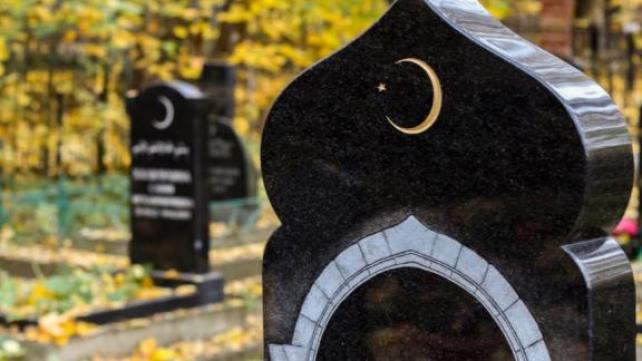
SUMMARY: A reminder on the importance of attending funerals for Muslims.
I have attended many funerals throughout my life. Most of them were for people I did not know. Growing up as a Muslim boy, my father often encouraged me to attend funerals at mosques if we were able to, and until recently, it felt like a chore. I asked myself, why should I attend a funeral if I did not know this person? The answer I give myself and to people who ask me is “if I died, I wouldn’t want people to ignore my funeral.” Aside from my personal thoughts on this, Islam encourages Muslims to attend funerals if they can. Attending funerals for family members and others shows respect and offers spiritual benefits for the deceased and the attendees.
There are a couple of hadith about the etiquette of the Prophet Muhammad, may Allah send peace and blessings upon him, during funerals. Jabir ibn Abdullah reported that the Prophet stood up to show respect when a funeral passed by, and they stood up along with him, may Allah send peace and blessings upon him. When told that it was a Jewish funeral, he replied, “Death is a fearful event, so when you see a funeral, stand up.” (Mishkat al-Masabih 1649, also mentioned in other books such as Sunan Abi Dawud and Sahih Bukhari). This hadith shows the importance of showing respect when a funeral is occurring, not only for fellow Muslims but to non-Muslims as well. The ruling on attending non-Muslim funerals is a debated subject, but the common agreement is that simply showing respect but avoiding any heavy non-Muslim traditions is alright, especially since many Muslims have non-Muslim family members and need to support their family. Additionally, in the hadith, Prophet Muhammad, may Allah send peace and blessings upon him, mentions that “death is a fearful event,” which shows that funerals are a reminder for us of the fragility of life and the inevitability of death. Being reminded of this helps to shift our focus to the more important things in our lives.
Abu Hurairah said: “The Messenger of Allah said: ‘Whoever follows a funeral and offers the funeral prayer, then leaves, will have one Qirat reward. And whoever follows it and offers the funeral prayer, then stays until the burial is completed, will have two Qirat of reward, both of which are greater than Uhud.’” (Sunan Nasai 1997). This hadith goes over the more religious benefits of attending funerals. The use of “Qirat” as a measurement for rewards is equivalent to a pile of gold the size of Mount Uhud. This shows both the benefit in the sight of God and just how important it is in general to attend a funeral.
Something I heard many people say is that if the number of attendees at a funeral is about a hundred, prayers for the deceased’s forgiveness will be accepted. Other narrations mention this being forty attendees rather than one hundred. It is mentioned on Islamic forums, but I cannot find the hadith and its citation.
Funerals in Islam are a communal obligation rather than an individual one, meaning that if enough people attend a funeral, you are not required to attend. However, it is recommended, especially for Muslim men, to attend a funeral anyway to show respect for the deceased and their family. Outside of Islam, attending funerals of people you do not know can be considered disrespectful or intrusive. Of course, some people do not mind it and think of it as a respectful gesture. The ruling on funerals in Islam shows the heavy emphasis the religion has on community and how important it is to support others. Muslims should attend funerals at mosques if they can, as the prayer takes only a couple of minutes and will bring about spiritual blessings and show appreciation for the deceased and their family.
Related:
(1) Death is Certain, Mercy is Greater: Finding Peace in Allah's Qadr
(2) When the Pigeon Passed Away: A Teachable Moment for Children







Add new comment