
SUMMARY: A family's encounter with an injured pigeon becomes a powerful lesson about compassion, grief, and caring for Allah's creation.
One sunny afternoon last year, after picking up my children from school, I decided to take a longer route home because of heavy traffic. Rather than cross the intersection and turn directly into our driveway, I took the next road over, drove up and around the block, and made my way toward the corner where our split-level sits. What happened next was a complete surprise. As I drove down the road, I noticed a pigeon sitting in the middle of the street. Rather than fly away or move at the sight of oncoming traffic, it remained there, unbothered. I slowed the van and pointed it out to my children - then aged 13, 9, 8, and 4 - who thought it was the cutest sight. One of them said, “I wonder why it’s not moving.” To our shock, another car swerved around us and almost hit the pigeon, but when it stayed in place, I knew something was wrong.
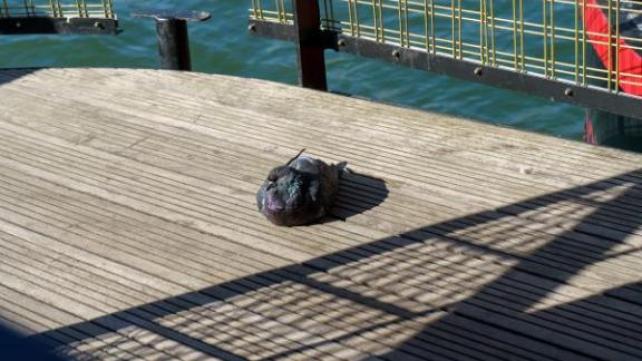
I turned on my emergency lights, parked on the side of the road, motioned for my children to stay seated, and got out to check on the pigeon. He barely moved as I approached, and it seemed like he may have been injured. I patted his head softly, and he did not protest, so I scooped him up gently and brought him to the side of the van so my children could see him. The poor bird stayed still, breathing rhythmically, but unable to flap its wings. I inspected it and saw no signs of external injuries. However, I could not bring myself to leave it there on the side of the road, for fear he would be run over or hurt by another animal. I carefully handed the bird to my eldest daughter, who was sitting on the passenger seat, and told her to be gentle with him. She cradled him as I climbed back into the van and drove us home.
Once we were parked in our driveway, my children and I cautiously brought the bird into our front yard, sat him down, and observed him closely. My children were delighted by its beauty and gentle disposition, even asking if they could keep it as a pet. He had pretty blue eyes, gray and black feathers, and subtle hints of metallic green and blue running from his head to his neck. Suddenly and unexpectedly, he spread his wings and attempted to fly, managing only to rise a few inches and land back onto the soft grass. It was obvious that something was wrong internally, and whatever it was, it was preventing the bird from taking off.
We moved him from the front yard to the more secure backyard and gave him some water, keeping him as comfortable as possible. My children were careful not to bother him but allowed him enough space to sit and look around at his new surroundings. The pigeon remained calm for some time, giving me a chance to find the number for wildlife services. However, things took another unexpected turn as the pigeon boldly tried to fly away again. This time, he was able to lift off high into the air, but as he ascended higher, he suddenly nosedived near the fence and crashed onto a dirt patch. We ran over to find him on his back, his eyes staring off at the sky, still breathing. Slowly, his breathing stopped, and he eventually closed his eyes as his tiny body stiffened.
My children were completely devastated, but there was nothing we could do. His last attempt to fly ended his fragile life right before our eyes. I explained to them that it was Allah’s decree that this creature pass away in that very manner, at that moment, and in that place. Perhaps our being with him in those final minutes was a gift. He could have died in the middle of the busy street, run over by a passing car, or snatched by a merciless predator. Instead, he was cared for by a loving family who tried their best to keep him safe when he needed it most.
To further console my children and teach them about caring for even dead creatures, I suggested we bury the pigeon and hold a brief pretend “janazah” for him. To clarify, it is not prescribed in Islam to have a janazah or funeral for a dead animal. However, scholars have explained that it may be necessary to bury them for the greater good. For example, on IslamQA.org, it says:
“We do not say concerning an animal, when it dies, that part of honoring it is burying it, as we say about human beings. But if burying an animal will ward off harm from the Muslims, then it is prescribed to do so, because burying it in that case comes under the heading of removing something harmful from the road used by the Muslims.”1
In the past, we buried pets like goldfish and guppies in our backyard after they died, so we decided to do the same for our pigeon friend. Although it is not necessary to shroud a dead bird or animal, one of my daughters volunteered her own scarf to wrap the pigeon, and I did so only to honor her request. I dug a deep hole on the side of our home and gently lowered the pigeon into its burial site as my children sniffled beside me. Even though it was a sad moment, I felt that we all learned a valuable lesson. It taught my children about the fragility of life and reminded me of the compassion of the Prophet Muhammad, peace and blessings be upon him, in similar situations.
On one occasion, Anas ibn Malik said that the Prophet Muhammad, may Allah send peace and blessings be upon him, would visit his home. His little brother, nicknamed Abu Umayr, used to have a pet sparrow he would play with. One day, his bird died. Anas ibn Malik said:
“The Prophet entered one day and saw (Abu Umayr) grieving, so he said, ‘What is the matter with him?’ They said, ‘His sparrow has died.’ The Prophet sat beside him to console him and said, ‘O Abu Umayr, what happened to the little sparrow?’” (Sunan Abi Dawud 4969)
The Prophet’s soft response to Abu Umayr offers parents a powerful model for moments like these. Rather than dismissing the child’s sadness or rushing him past his feelings, he acknowledged his grief, accompanied him, and invited him to share what had happened. In that simple act, he taught us that a child’s sorrow and a pet, no matter how small, deserve to be honored. From this hadith, children also learn that kindness is not limited to humans, that every living being matters, and that grief is a natural expression of love. Parents, on the other hand, learn that slowing down, acknowledging a child’s emotions, and treating even a tiny bird with dignity can plant seeds of empathy that last far beyond the moment of loss.
My children still recall the day the pigeon passed away, calling it a sad moment but also acknowledging that it was something outside our control. They saw up close how fragile life truly is and how important it is to be with loved ones in our weakest moments. When I asked my daughter what lesson she took from that experience, she said that she learned that we can never take anything for granted. Her reflection captures the heart of what the Prophet’s example teaches us about grief. Mourning is a natural part of letting go, and even in moments of loss, we can pause to thank Allah for the time we were given with His creation.


Add new comment