

Munir first noticed it during a dhuhr prayer at work. His hands trembled slightly as he raised them for takbir, a faint dizziness washing over him like heat rising from asphalt. He brushed it off, too much coffee, not enough breakfast. But when it happened again a week later, this time with a cold sweat and a hollow ringing in his ears, he knew something was wrong.
The diagnosis came quietly, almost apologetically.
Diabetes.
The doctor explained blood sugar levels, insulin, and drops that could come without warning. She spoke of meals that could not be skipped, of medication that demanded consistency. Then she paused and asked, “Are you fasting?”
Ramadhan was three weeks away.
“I always fast,” Munir said instinctively.
She looked at him kindly. “This may be a challenging year for you. I advise that you forgo fasting.”
That night, Munir sat at his kitchen table long after his family had gone to bed, staring at the insulin pen in its box. Forty-six years old. He had fasted since childhood, through exams, construction jobs, and the long days of summer. Hunger had always felt like worship. But this was new. This wasn’t discomfort. This was a danger.
Still, the thought of Ramadhan without fasting felt unbearable.
The masjid was calm the afternoon Munir went to see the imam. Sunlight filtered through the high windows, dust motes drifting in the air like suspended moments. The imam welcomed him warmly and poured tea before listening without interruption. Munir raised a hand, suggesting that he didn’t want any sugar in his.
Munir spoke slowly, choosing each word with care. “Shaykh, I’m taking insulin now. My sugar drops suddenly. The doctor warned me that if it drops too low, I could faint. Or worse.” He swallowed. “But Ramadhan is coming. I don’t want to stand before Allaah having chosen ease over obedience.”
The imam nodded, his expression steady.
“Munir,” he said, “obedience is not measured by pain.”
He opened a mushaf resting beside him and recited softly, the words familiar yet newly alive:
“So whoever sights the month, let him fast it; and whoever is ill or on a journey, then an equal number of other days. Allaah intends for you ease and does not intend for you hardship.”
Munir felt something loosen in his chest.
“These words,” the imam continued, “are not abstract. They are mercy, placed directly into law. Illness is not an excuse Allaah tolerates. It is a condition He addresses.”
“But what if I can fast some days?” Munir asked. “What if I push through?”
The imam leaned forward slightly. “There are scholars who explained this in detail. If fasting harms you or leads to hardship, then not fasting is better for you. And if fasting puts you in real danger, then breaking the fast becomes obligatory. Preserving life is not optional in Islam.”
Munir stared at his hands. “It feels like I’m losing something.”
The imam smiled gently. “You are being asked to gain something deeper.”
He spoke of intention. Of worship that took many forms. Of people who stood in prayer while others worshipped Allaah by sitting, because that was what Allaah allowed them. “Allaah is not in need of your hunger,” the imam said. “He is pleased by your submission.”
The first day of Ramadhan arrived with the familiar rhythm Munir had known his whole life. He woke before fajr, even though he wasn’t fasting. He sat at the table while his wife prepared suhoor for the children, the smell of dates and bread filling the kitchen. When they ate, he drank water slowly, took his medication, and made du‘a.
It felt strange not to abstain. At work, the hours stretched long. His body remembered fasting even when his mind told him not to. At noon, his sugar dipped despite his precautions. He sat down, pricked his finger to check his levels, and drank his juice.
His hands stopped shaking.
That evening, Munir arrived early at the masjid for iftar. He helped arrange dates and cups of water. When the adhan echoed, he passed plates down the rows, watching others break their fasts. He felt a flicker of sadness adjusting to a life of counting carbs, and then something unexpected.
Contentment.
He ate quietly, intentionally, whispering “Bismillaah” with a focus he hadn’t felt in years. Each bite felt purposeful. Each sip was gratitude.
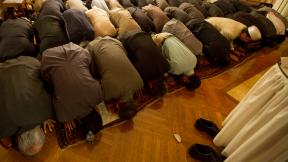
Days passed. Munir settled into a new Ramadhan rhythm. He prayed taraweeh when his body allowed. On nights he felt weak, he prayed at home. He gave more charity than usual. He sat longer with Qur’an, unhurried by hunger. He listened to his body as an act of worship.
One afternoon, his son asked innocently, “Baba, why aren’t you fasting?”
Munir knelt to his level. “Because Allaah loves me enough to protect me,” he said. “And because obeying Allaah sometimes means accepting what He makes easy.”
By the middle of the month, Munir realized something profound.
He had always associated Ramadhan’s sweetness with dates, with the relief of iftar, with the discipline of hunger. But now he tasted a different sweetness, the sweetness of trust. Of letting go of pride disguised as devotion. Of believing that Allaah’s mercy was not a lesser path, but the straight one.
On the last ten nights, Munir sat alone in the masjid after isha, lights dim, rows empty. He raised his hands and made du‘a not for strength to fast, but for acceptance.
“Ya Allaah,” he whispered, “You know my heart. You know my body. Accept from me what I can give.”
When Eid came, Munir stood in prayer among the community, his heart full. He had not fasted that Ramadhan, but he had learned something he had missed for decades.
That worship was not measured by deprivation.
And that sometimes, the true sweetness of Ramadhan was not in lowering sugar, but in surrendering to Mercy.
……………..
Author bio: Abu Hudhayfah Edwards is an author of Islamic children’s books dedicated to amplifying the voices and experiences of young Muslims living in the USA and Canada. As the creator of WKTL Radio, also known as IslamLife Radio, and Medina Educational Institute (MEI), he channels his passion for education and community into engaging stories that reflect the cultural styles and realities of Muslim youth. Once featured in Style Weekly in the article “After These Messages,” where he was described as “stoic and deep thinking,” Abu Hudhayfah Edwards continues to write with purpose and vision, committed to ensuring that Muslim children see themselves represented in the books they read.





Add new comment