
SUMMARY: Lessons from Prophet Ibrahim and his family in service, intelligence, moral courage, and trust in Allah.
"Indeed, Allah chose Adam, Nuh, the family of Ibrahim, and the family of Imran above all people [of their time]." (Quran, 3:33)
Prophet Ibrahim, peace be upon him, is so significant that his name is mentioned in each prayer during the Salat Ibrahimiyya. We beg Allah to bless both Prophet Muhammad, may Allah send peace and blessings upon him, and his followers in the same manner in which blessings were bestowed upon Prophet Ibrahim, peace be upon, and his followers. (Oh Allah, Bless Muhammad and the followers of Muhammad as thou did bless Ibrahim and the followers of Ibrahim for Surely Thou art Praised and Magnified.)
Not only is Prophet Ibrahim, peace be upon him, mentioned in our daily prayers, we make this same du’a upon the death of a Muslim as part of the overall janazah prayer. His story includes his family in the Hajj, from Hajrah running between the hills of Safa and Marwa seven times searching for water for her son Ismail, to the stoning of the jamarat with Prophet Ibrahim resisting the whispering of shaitain, to the ritual sacrifice symbolic of Prophet Ibrahim's willingness to sacrifice his son in obedience to Allah.
The story of the family of Ibrahim serves as a lasting example of strong Iman, leadership in gender and family roles and obedience. There family is one to emulate and reflect upon
Unwavering Faith even under the most difficult of circumstances
"Indeed, Ibrahim was a model of excellence: devoted to Allah, upright—not a polytheist—grateful for Allah’s favours. He chose him and guided him to the Straight Path." (Quran 16:120-21)
Prophet Ibrahim, peace be upon him, was an obedient servant of Allah who led his family and community to Tauheed. Through his story we find the lessons of how a leader leads. He has strong Iman, clarifies what is expected of him, obeys Allah, accepts responsibility and duties, resists the whispering of shaitan, and establishes a nation.
The Quran tells how he questioned about what to worship rather than creatures, a sign that he was searching for the truth. He stood up against the disbelief of his father at his own peril and eventually accepted the Qadr of Allah.
“When Ibrahim said to his father and his people: Surely I am free of what you worship.” (Quran 43:26)
However, his willingness to sacrifice his own son was a mighty test, even as the whisperings of shaitan strove to create doubt and hesitation. The stoning of the jamarat during the rites of Hajj are a reenactment of Prophet Ibrahim, peace be upon him, driving away those influences that would make him disobey the will of Allah.
Prophet Ibrahim, peace be upon him, was a testament to obedience and unwavering faith when he sought to fulfill his duty and lesson for all families. Allah calls out to Ibrahim: "O Ibrahim! Thou hast already fulfilled the vision!" and that He would replace Ibrahim's son with a great sacrifice. (Quran, 37:104-107).
Importance of women in the family and society
In the story of Hajrah, the wife of Prophet Ibrahim, again we find leadership qualities. She too has strong Iman, questions for clarity, is obedient, accepts Allah's Decree, resists the whisperings of shaitan, and does her part to guide her family and establish a nation.
When Allah commanded Prophet Ibrahim to take Hajrah to the desolate area of Bakkah, this was a great test for both of them. When she realized he was about to leave her and her son, it is reported in the hadith that she questioned seeking clarity, “O Ibrahim. Where are you going, leaving us in this valley where there is no one nor is there anything else around (a barren land)?’"
'She repeatedly asked," the hadith states, "but he did not turn (to respond). She then asked him, ‘Did Allah command you to do so?’ He said, ‘Yes.’ She said, ‘Then He [Allah] will not leave us.’" (Sahih Al-Bukhari)
Hajrah accepted that her husband was doing the will of Allah and respected his leadership as both her husband and a messenger of Allah. We can only imagine the strong faith in the Qadr of Allah it must have taken this woman to accept this fate. But her level of Tawakkul, trust and reliance on Allah, was the highest as she uttered a strong belief that even under these circumstances she knew, without doubt that Allah was near and Merciful.
After being left in the desert, Hajrah took the lead to oversee the needs of her child. While in this desolate area she ran between the hills of Safa and Marwa which is reenacted in the Hajj and Umrah now, fifteen centuries later. The water found on the heels of her son would become the well of ZamZam which pilgrims drink and the city established would be Makkah. Her story celebrates the significance and leadership of women in the establishment of family life and society. Water is used to nurture and cultivate life and Hajrah’s action are symbolic of how women cultivate the moral life of the family and people. Prophet Muhammad, may Allah send peace and blessings upon him, reinforces her significance by reenacting her journey as one the principle rites of Hajj thus grounding the importance of women.
Listening and working with our Children
Indeed, even with Hajrah's son Ismail, peace be upon him, we see leadership. Like his parents he has the lesson of questioning for clarity, obedience and acceptance, resisting the whisperings of shaitan, strong faith and the establishment of a nation.
"Then when the boy reached the age to work with him, Ibrahim said, “O my dear son! I have seen in a dream that I ˹must˺ sacrifice you. So tell me what you think.” He replied, “O my dear father! Do as you are commanded. Allah willing, you will find me steadfast.” (Quran, 37:102)
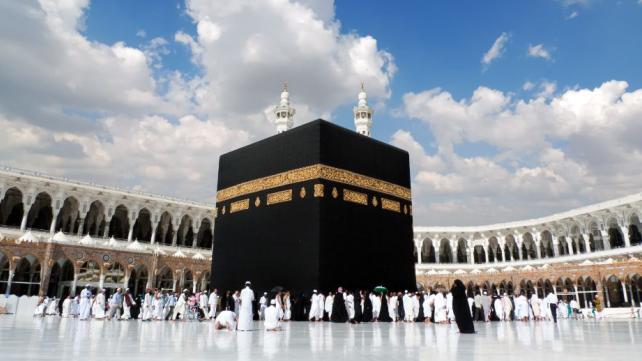
Like his mother Hajrah, Ismail questioned for understanding and then accepted the Qadr of Allah with unwavering faith and trust. He demonstrated the same leadership qualities as his father. This is an excellent example for all children in every family. We can also reflect on the importance of parents and children working together for family and nation when we consider how Ismail and Prophet Ibrahim, be upon them, built the foundation for the house which Muslims make pilgrimage to each year.
"Peace be on Ibrahim." (Quran, 37:109)
Author bio: Mahasin D. Shamsid-Deen is the news curator and content manager for Muslim Network TV (MNTV) and contributing writer for Sound Vision. She holds a master’s degree in English writing and has worked as both a High School and College ESL Instructor and Writing Instructor for more than a decade. Mahasin has numerous published articles, books, essays and is a published playwright with three award winning stage plays. She is currently writing her dissertation for her doctoral degree.
Related:
Lessons from the Family of Ibrahim, peace be upon him
Bringing back Young Leaders: Inspiration from the Story of Usama ibn Zayd







Add new comment