
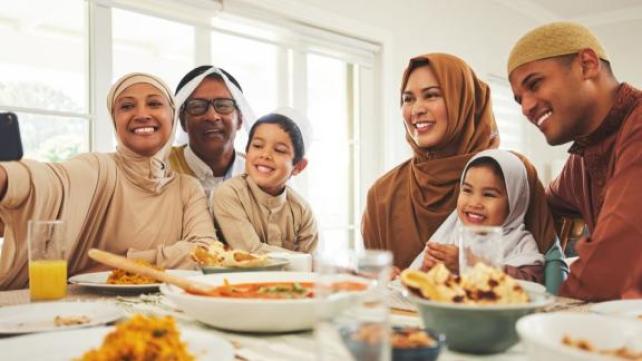
SUMMARY: Tips for Muslims to accommodate individuals with special needs during their celebration of Eid.
For many Muslim families, Eid is one of the most joyful times of the year. Mosques fill with worshippers dressed in their finest, children exchange hugs and sweets, and communities gather to celebrate faith, gratitude, and togetherness. Yet for families who have loved ones with special needs, Eid can also bring challenges. Crowded prayer spaces, loud environments, unfamiliar routines, and limited accommodations can make attending Eid prayers or community celebrations overwhelming. As a result, some families quietly choose to stay home—not because they lack the desire to celebrate, but because they worry their loved one may not be understood, supported, or welcomed. Creating an inclusive Eid is not only possible; it reflects the spirit of mercy, compassion, and community care that lies at the heart of our faith.
Families who care for individuals with autism, developmental disabilities, sensory sensitivities, mobility challenges, or other special needs often face barriers that others may not notice. Eid prayer gatherings can be intense environments, with large crowds, tightly packed prayer rows, amplified sound systems, and long sermons. For someone with sensory sensitivities, this level of stimulation can quickly become distressing. For individuals with mobility challenges, reaching prayer areas or restrooms may be difficult if spaces are not accessible. Parents of children who vocalize, move frequently, or struggle with transitions may feel anxious about being judged by others in the congregation. Because of these concerns, families sometimes attend only briefly—or skip Eid prayers entirely. Over time, this can lead to feelings of isolation not only for the individual with special needs, but for the entire family.
Building an inclusive environment is a shared responsibility within the community. When mosques and event organizers intentionally plan for accessibility, they send a powerful message that every member of the community belongs. Inclusion begins with awareness and thoughtful preparation. Even small adjustments can make a meaningful difference and help families feel more comfortable participating in celebrations.
One helpful approach is creating sensory-friendly or quiet spaces within the mosque or event area. A designated low-stimulation room allows individuals who feel overwhelmed to take a break without having to leave the celebration completely. Flexible prayer arrangements can also help; providing space toward the back or sides of the prayer area allows families to step out easily if needed. Clear signage and trained volunteers are another important support. Volunteers can guide families to accessible entrances, elevators, restrooms, or quiet rooms and help them navigate the event with ease. Structuring announcements clearly and keeping them concise can also create a more predictable environment, which benefits individuals who rely on routine.
Fostering a culture of compassion is just as important as physical accommodations. Community members can help create a welcoming atmosphere by understanding that behaviors such as vocalizations, movement, or the use of assistive devices are simply part of how some individuals participate. When these behaviors are normalized rather than viewed as disruptions, families feel less pressure to “blend in” and more freedom to engage in the celebration.
Inclusive planning should extend beyond the prayer hall to Eid festivals, carnivals, and community gatherings. Organizers can create sensory-friendly activity areas where noise and stimulation are reduced, offer early or quieter attendance hours for families who prefer a calmer environment, and ensure that walkways and seating areas are wheelchair accessible. Providing visual schedules, maps, or clearly labeled zones can help families know what to expect, which can reduce anxiety and make events easier to navigate. Training volunteers on respectful ways to assist families can further strengthen the sense of welcome.
Community members themselves also play a meaningful role in building inclusive spaces. A simple smile toward a parent who looks overwhelmed, offering to help carry food, or guiding someone toward a quieter area can make a big difference. Responding with patience and kindness when a child makes noise or needs extra space helps families feel accepted rather than judged. Often, the most powerful form of inclusion is simple understanding.
When communities intentionally create accessible environments, everyone benefits—not only individuals with special needs, but also elderly community members, young children, and anyone who may feel overwhelmed in large crowds. An inclusive Eid allows every family to experience the joy of prayer, connection, and celebration together. With thoughtful planning, awareness, and compassion, our mosques and community spaces can become places where every person feels valued and welcomed. And when that happens, the spirit of Eid becomes even more beautiful—because no one is left outside the celebration.
Tips for Creating an Inclusive Environment
- Provide quiet or sensory-friendly spaces for individuals who may feel overwhelmed.
- Allow flexible seating or prayer arrangements for families who may need to move in and out.
- Use clear signage and trained volunteers to help guide attendees.
- Offer accessible pathways, seating, and restrooms for individuals with mobility challenges.
- Consider quieter or early attendance hours for large Eid events.
- Provide visual schedules or maps of activities and spaces.
- Encourage community awareness and kindness toward different needs and behaviors.
- Train volunteers and leaders on how to respectfully support individuals with disabilities and their families.
Author bio: Miriam is the proud mother of seven children of different ages, an experience that shapes her perspective on education and advocacy. Based in the Chicagoland area, she has taught in an Islamic school and currently works in a public school, supporting students and families and promoting inclusive learning environments. As the mother of a child with autism, Miriam brings personal insight and compassion to her work advocating for children with diverse learning and developmental needs. She is passionate about fostering inclusion, understanding, and equity within her community. As the mother of a child with autism, Miriam brings personal insight and compassion to her work advocating for children with diverse learning and developmental needs. She is passionate about fostering inclusion, understanding, and equity within her community.
Related:
(2) Opening ourselves this Eidul-Fitr
(3) 10 Things Mothers and Caregivers of Children with Autism want you to Know




Add new comment