
SUMMARY: Parents can help their children start a Muslim Student Association at school, which provides a community hub, a platform for friendships, and religiously reinforcing activities to enhance students' values.
Of all the things I left behind when I stepped away from teaching to raise my family, helping Muslim students through our school's Muslim Student Association (MSA) is what I miss most. I taught beginner- through advanced-level Spanish at a public high school over twenty years ago, and as the only visibly Muslim teacher on staff, I naturally became the faculty advisor when the students wanted to establish an MSA. Although I have never regretted dedicating my time to my growing family, stepping away from that role was one of the hardest parts of leaving the classroom because I felt I was letting those students down. Nevertheless, they thrived, and years later, when I ran into one of my former MSA students, I was delighted to learn that she was doing well and still had fond memories of our time together.
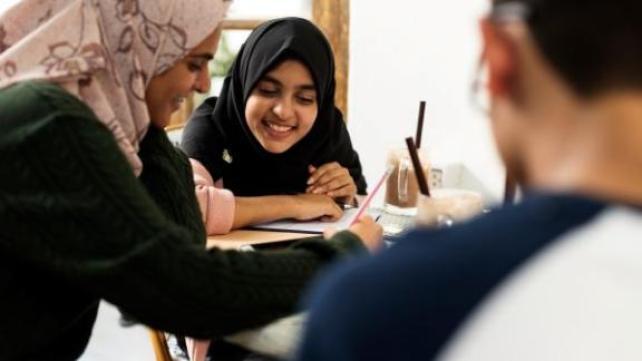
For many Muslim students, an MSA can become a lifeline. It provides a safe place to gather, advocate for religious accommodations, build meaningful friendships, strengthen faith, and organize activities that reflect students' interests and values. An MSA can truly become a community hub within a school, college, or university. For my former students, it was where they gathered to socialize, ask questions about their faith, and support one another through the unique challenges of being Muslim in a public school. They looked to their faculty advisor as a guide, mentor, and advocate. That is why leaving the MSA behind was one of the most difficult parts of my decision to step away from teaching.
To my relief, another teacher was able to assume the role despite not being Muslim. While that may not have seemed like the ideal arrangement at first, it proved to be exactly what the students needed. At the time, they were simply looking for a place to gather with friends and feel a sense of belonging. With the continued support of their parents, their advisor, and other caring school staff, the MSA continued to flourish. It all began with a shared vision, careful planning, and people willing to work together. Whether your child is the first to suggest starting an MSA or simply wants to help one get off the ground, the following seven tips can help you support them every step of the way:
1. Make the Right Intention
Every worthwhile endeavor begins with the right intention, and an MSA is no exception. Help your child reflect on why they want to start a Muslim Student Association. Is it to strengthen the faith of Muslim students, educate others about Islam, build friendships, or create a welcoming space on campus? The answer may be all of these. Remind your child that establishing a club is a serious responsibility that requires commitment and perseverance. Once they begin, encourage them to see the project through, even when challenges arise. This experience will help develop patience, resilience, and leadership skills that will benefit them long after high school.
2. Learn Your School's Club Requirements
Take time to learn your school's process for establishing a new student organization. Every school has its own requirements, paperwork, deadlines, and policies, so encourage your child to speak with the activities coordinator or administration early in the process. Building positive relationships with school staff from the beginning can make things easier. Teach your child to communicate respectfully, ask questions, and keep the lines of communication open throughout the school year. A cooperative approach will serve them well both now and in future leadership roles.
3. Find Other Interested Students
Starting an MSA does not require a large group of students. Encourage your child to invite friends and classmates who may be interested in helping establish the club. Even a handful of committed students is enough to build a strong foundation. As interest grows, help your child create a contact list with email addresses or another school-approved method of communication so everyone stays informed about meetings, paperwork, and upcoming events.
4. Build a Leadership Team
Building a successful MSA is a team effort. Your child must identify classmates with different talents and strengths who can share the responsibilities of organizing the club. Even if only a few students are involved initially, they can begin assigning informal responsibilities and later hold elections once the MSA is officially established. Parents can support students by helping with transportation, refreshments, fundraising, or event planning, while allowing students to take ownership of the club's leadership.
5. Find a Supportive Faculty Advisor
Every school club needs a faculty advisor, so encourage your child to think carefully about which teacher or staff member would be most supportive. While a Muslim teacher may be an ideal choice, a caring non-Muslim educator can be just as valuable if they believe in the MSA's mission and are willing to supervise meetings. The advisor's role is not to serve as a religious authority, but to help students navigate school policies and provide guidance when needed.
6. Keep the MSA Welcoming and Educational
An MSA should be a welcoming community where everyone interested in Islam feels comfortable attending. Remind your child that an MSA is not a monocultural club, but a reflection of the diversity of the Muslim community itself. They should strive to uphold Islamic manners by treating everyone with kindness and respect and by avoiding behavior that unintentionally excludes others, such as speaking another language during group discussions or forming cliques based on ethnicity, culture, or sectarian differences. The goal is to create an environment where every student feels valued and respected.
7. Plan Activities That Build Community
Once the MSA is ready to launch, help your child make the first meeting welcoming and memorable. Consider serving refreshments, planning a few icebreaker activities, and inviting a local speaker to encourage students. From there, work together to create a calendar of events for the school year that balances education, service, and fun. Activities might include movie or game nights, bake sales, sporting-event watch parties, multicultural fairs, Islamic Awareness Week, Ramadan iftars, Eid celebrations, open-mic nights, service projects, or casual weekly hangouts. Well-planned activities help students build friendships, strengthen their faith, and create a lasting sense of belonging that will encourage future students to continue the MSA for years to come.
Know that, as a parent, your care and support may open the door to something greater than you can imagine. When you help your child establish an MSA at their school, you are not only supporting them today but also investing in future generations of Muslim students and the communities they will one day serve. My former students probably had no idea that their efforts would leave a lasting legacy for the students who came after them. Yet every meeting they organized, every event they hosted, and every obstacle they overcame helped create a welcoming space that future generations would inherit. I pray your children have the same opportunity to leave behind a legacy of faith, friendship, and service that will continue to benefit others long after they graduate, insha’Allah.
For additional guidance on starting a Muslim Student Association, explore these helpful resources:
- MSA National chapter starter guide: https://static1.squarespace.com/static/5ddd910fddc8a7384d075285/t/5e83df5f9a166a1f62f34967/1585700703952/MSA+Guidebook.pdf
- Muslim Interscholastic Tournament (MIST) MSA guide:
https://www.getmistified.com/how-to-start-an-msa
Related:
(1) Bringing back Young Leaders: Inspiration from the Story of Usama ibn Zayd
(3) Start the School Year Right: College Student Organization Tips




Add new comment