
SUMMARY: The vast stretches of rural America are a promising frontier for American Muslims to establish communities.
America tells a convenient story about Muslims.
It places them in New York, Los Angeles, and Chicago. It imagines storefront Masajid, packed Eid prayers in city parks, and communities built around density.
But that’s not where this story begins.
It begins on open land. Wind cutting across miles of prairie. No skyline. No adhan echoing between buildings. Just a handful of believers, holding on.
In the early 1900s, near a quiet stretch of land in North Dakota, families like Mary and Hassen Juma weren’t building institutions. They were building survival.
They were Muslim. They were farmers. And they were far from everything.
No imam. No Islamic school. No Masjid.
So they did what believers have always done.
They made one.
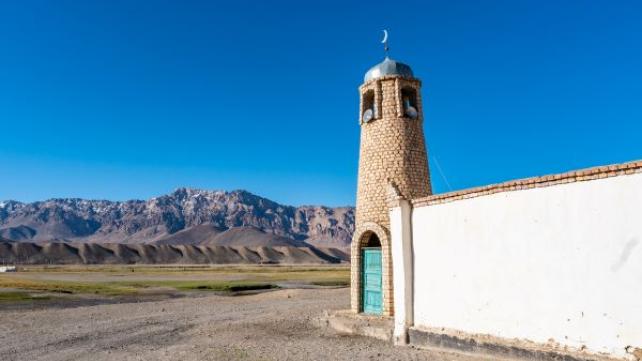
Not with domes or minarets, but with intention. A corner of a home. A space cleared on land. A direction known by memory and conviction.
Five daily prayers didn’t stop because geography changed.
Jumu’ah didn’t disappear because numbers were small.
Islam didn’t weaken because the nearest Muslim might be miles away.
It adapted. Quietly. Firmly. Without announcement.
And by 1929, that quiet persistence became something more.
A small, modest Masjid near what we now recognize as the Assyrian Muslim Cemetery.
No grandeur. No headlines.
But it stood.
For years, that Masjid served a scattered community of Syrian and Lebanese Muslim homesteaders. They buried their dead nearby. They gathered when they could. They raised children who carried both faith and frontier resilience.
Then, like many early American communities, they changed.
Families moved. Generations assimilated. The original structure eventually disappeared.
And for a while, it felt like the story ended there.
But it didn’t.
Because what was planted in Ross wasn’t just a building.
It was a pattern.
Today, Muslims are returning, not just to cities, but to the same kind of spaces those early families once occupied.
Across rural America, you’ll find:
- * Small Muslim families in farming towns
- * Truck drivers praying on the side of highways
- * Students attending universities in quiet states
- * Reverts holding onto Islam without community infrastructure
- * Immigrant families settling where opportunity exists, not where density comforts
This is not the exception anymore.
It’s the next chapter.
We’ve spent decades reinforcing the idea that Muslim life in America requires numbers to thrive.
That you need a Masjid within driving distance.
That you need a full community to stay connected.
That Islam is strongest where Muslims are many.
But the prairie tells a different story.
Islam survives, and even grows, where Muslims are few.
The Juma family didn’t wait for a community to form before practicing their faith.
They practiced, and that became the community.
That’s the shift we need to understand.
Because today, there are thousands of Muslims living outside the traditional hubs. Some by choice. Some by necessity. Some chasing opportunity. Some rebuilding their lives.
Many of them are isolated.
And too often, we treat their situation like a disadvantage.
But what if it’s actually an opportunity?
Rural America is not empty ground.
It is open ground.
Ground where:
- * land is affordable
- * communities are smaller, but more connected
- * influence is more direct
- * visibility carries weight
And more importantly, it is ground where Islam has already been planted before.
Not theoretically.
Historically.
The question is not whether Muslims can live and thrive in rural America.
The question is whether we are willing to see it as part of our future.
Because the blueprint is already there.
It looks like:
- * families establishing salah in their homes
- * small gatherings becoming consistent
- * a room turning into a musalla
- * a musalla becoming a center
- * a center becoming a Masjid
That’s how it started in Ross.
That’s how it can start again.
And in some places, it already has.
You won’t always find these communities online.
You won’t always see them represented in media.
But they exist.
Quietly building something real.
And maybe that’s the point.
Not every Masjid needs to be large.
Not every community needs to be visible.
Some just need to be consistent.
There’s something powerful about knowing that over 100 years ago, Muslims stood in the cold plains of North Dakota, facing a direction most of their neighbors didn’t understand, holding onto a faith most had never seen.
And they didn’t let go.
No grants. No organizations. No networks.
Just belief.
Today, we have more resources than they ever did.
More access. More connection. More knowledge.
We have the internet.
And yet, we hesitate.
We question whether a place is “suitable.”
We ask if there are “enough Muslims.”
We wait for infrastructure before we commit.
They didn’t wait.
They built.
And what they built still speaks.
From a quiet cemetery in North Dakota…
To the growing presence of Muslims in places no one expected…
The message is clear:
Islam in America was never just an urban story.
It was always a frontier story.
And the frontier isn’t behind us.
It’s still ahead.
Author bio: Abu Hudhayfah Edwards is an author of Islamic children’s books dedicated to amplifying the voices and experiences of young Muslims living in the USA and Canada. As the creator of WKTL Radio, also known as IslamLife Radio, and Medina Educational Institute (MEI), he channels his passion for education and community into engaging stories that reflect the cultural styles and realities of Muslim youth. Once featured in Style Weekly in the article “After These Messages,” where he was described as “stoic and deep thinking,” Abu Hudhayfah Edwards continues to write with purpose and vision, committed to ensuring that Muslim children see themselves represented in the books they read
Related:
(1) Native American Muslims, a People to Know
(2) Dua beneath the Sky: Remembering the Creator through His Creation
(3) A Timeline of Islam in America: Helping Children Discover their History



Add new comment