
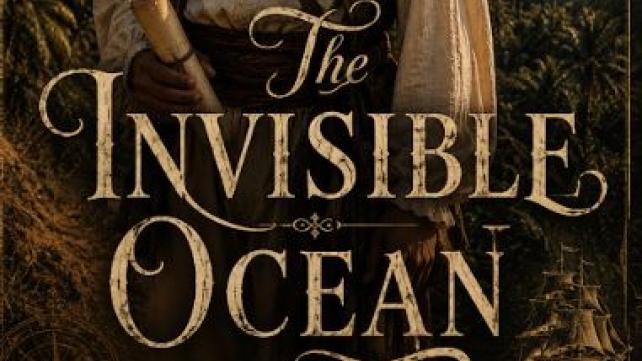
Puerto Rico, 1623
At nineteen years of age, Omar Arévalo had crossed an ocean few men of his village could have imagined.
His father often said that a family could lose its home without losing its history. They had carried little across the Atlantic besides a few treasured possessions, worn memories, and a surname chosen with quiet purpose. Arévalo was not merely the name of a Spanish town. Within Morisco circles it also honored a young Muslim writer whose secret manuscripts had preserved faith during an age when even possessing an Arabic page could cost a person his freedom.
“If books can survive persecution,” his father would remind him, “then so can ideas.”
Before Omar was born, his family had lived as Moriscos, Muslims compelled to hide their religion while quietly preserving whatever fragments of Islamic learning they could. His grandfather had memorized passages that no longer existed in written form. His father taught astronomy without diagrams, mathematics without libraries, and navigation without maps. They understood that rulers could confiscate books, burn manuscripts, and scatter families across oceans, but they could never confiscate a mind that reflected upon the signs of Allaah.
Those lessons had crossed the Atlantic with Omar.
Puerto Rico was beautiful, though it was not home.
The mountains rose sharply from the sea, wrapped in forests alive with unfamiliar birdsong. Clear rivers tumbled over smooth stones before emptying into the brilliant Caribbean. Giant palms swayed with every passing breeze, while clouds gathered each afternoon along the emerald peaks before dissolving again into endless blue.
At night, however, something remained wonderfully familiar.
The stars.
He found comfort knowing that the same heavens stretched over every land. The constellations his ancestors had studied above Córdoba, Granada, Fez, and Marrakech now shone above Puerto Rico. Kingdoms changed. Empires rose and fell. But the stars remained faithful witnesses.
Many of the young men around him believed survival left little room for scientific thought.
“What use is pondering the heavens?” one asked while mending fishing nets. “We are half a world away from the scholars.”
Omar smiled.
“The scholars are gone,” the man continued. “Their libraries are gone. Those days belong to the old country.”
Omar gently shook his head.
“Truth does not belong to Spain.”
He looked toward the sea.
“Nor Marruecos (Morocco).”
His eyes drifted toward the mountains.
“Nor Timbuktu.”
Finally, he looked upward.
“Truth belongs to Allaah. Wherever His creation exists, His signs remain.”
One afternoon Omar climbed a rocky overlook high in the mountains where he could see both the forests below and the vast Caribbean beyond. Frigatebirds drifted overhead for nearly an hour without appearing to flap their wings.
“They are remarkable fliers,” an older fisherman observed.
Omar smiled.
“They are remarkable swimmers.”
The fisherman laughed.
“In the sky?”
“In an invisible ocean.”
He bent down, picked up a smooth stone, and tossed it into the water far below.
“We call fish swimmers because we see the water surrounding them.”
Then he pointed toward the birds.
“But those birds are surrounded as well.”
“There is nothing surrounding them.”
“If there were nothing there,” Omar replied, “your lungs would draw no breath. Your voice would make no sound. Clouds would never travel. Ships would never sail. Neither birds nor kites would ever leave the earth.”
He slowly waved his hand through the air.
“Feel the resistance.”
The fisherman copied the motion.
For perhaps the first time in his life, he noticed that his hand was pushing against something.
“You have lived inside this ocean since the day you were born,” Omar said softly. “You simply stopped noticing it.”
A cool breeze drifted inland from the Caribbean, carrying with it the scent of salt and rain.
“The wind has arrived,” someone remarked.
“No,” Omar answered. “A current.”
He pointed toward the sea.
“The ocean contains rivers within itself. Warm waters travel across great distances while colder waters return beneath them. Experienced sailors learn these hidden pathways.”
He then gestured toward the heavens.
“The sky possesses rivers as well. Warm air rises while cooler air descends. Great currents flow across the earth carrying clouds, birds, insects, seeds, and rain.”
Above them, a frigatebird tipped one wing and climbed effortlessly higher.
“It is not fighting the air,” Omar said.
“It is reading the current.”
For days the thought refused to leave him.
If water carried ships…
Could not air carry birds?
If rivers possessed currents…
Could not the heavens possess them as well?
One evening he knelt beside a tide pool left by the receding sea. A straight twig resting beneath the water appeared bent. Shells seemed closer than they truly were.
He smiled.
He had seen this as a child in Spain.
Light itself was changing direction.
Later that evening the setting sun cast a golden road across the Caribbean. The light shimmered upon the waves before passing through the warm evening air into his eyes.
The realization struck him all at once.
Light did not merely travel.
It conversed with creation.
It slowed through water.
It bent through air.
It reflected from the sea.
It warmed the earth until rivers, lakes, and oceans released invisible vapor into the heavens. That vapor became clouds. The clouds returned rain to the mountains. Rivers carried the water once again to the sea.
Water.
Air.
Light.
None existed in isolation.
Each served the other according to laws established by Allaah long before mankind gave those laws names.
His thoughts raced faster than his pen could follow.
Perhaps people divided creation into earth, sea, and sky because they appeared different.
Yet perhaps they were parts of a single masterpiece whose harmony reflected the wisdom of its Creator.
He removed a rolled parchment from the satchel slung across his shoulder and carefully wrote:
“We walk each day upon the floor of an invisible ocean. Fish swim beneath its surface while birds swim within it. We seldom notice the sea above us until Allaah sends a breeze across our faces. The unseen is no less real simply because it cannot always be seen.”
He paused before adding one final thought.
“Exile may separate a man from his homeland, but it cannot separate him from the signs of his Lord. Wherever knowledge is sought with sincerity, every mountain becomes a classroom, every river a teacher, and every breeze an invitation to reflect.”
Omar rolled the parchment closed and looked once more toward the endless Caribbean sky.
For the first time since leaving the land of his ancestors, Puerto Rico no longer felt like the end of his family’s story.


Add new comment