
SUMMARY: How we can use acronyms as a method of teaching children about the Prophet Muhammad, may Allah send peace and blessings upon him.
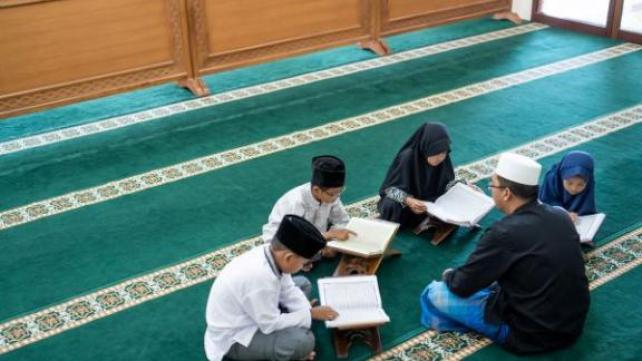
When teaching young children, caregivers and educators benefit from using a variety of strategies that are both age-appropriate and engaging. It cannot be overstated that games, rhymes, and storytelling play a central role in helping children remain attentive and eager to learn, regardless of the subject. Islamic studies is no exception. In fact, it offers a unique advantage, because it is rich with meaningful stories and examples that naturally capture a child’s imagination. One particularly effective and enjoyable method for teaching children is the use of acronyms. Acronyms help simplify complex ideas and support memory retention, allowing children to recall information more easily. From math formulas to grammar rules, this technique is widely used in education. When applied to Islamic learning, acronyms can be effective tools to help children remember key concepts, values, and teachings.
In this article, we will use the name MUHAMMAD as an acronym to introduce children to the beautiful character of the Prophet Muhammad, may Allah send peace and blessings upon him.1 Each letter will highlight a quality or teaching that reflects his noble example that can be memorized for later retrieval. This learning method is best suited for children who have already learned their letters and are beginning to read and retain simple concepts, typically ages 5 to 10. At this stage, children can recognize patterns, connect words to meaning, and recall short phrases, making an acronym a particularly effective and enjoyable learning tool. However, it can be adapted for younger or older children depending on their level.
It is my hope that parents, educators, and caregivers can use this acronym to teach the young people under their care about one of the most essential aspects of our faith: the second part of the testimony of faith, which affirms belief in the prophethood and servant leadership of the Prophet Muhammad, may Allah send peace and blessings upon him. Through this simple approach, children can begin to form a lasting connection with the Prophet’s character, may Allah send peace and blessings upon him, while learning lessons they can carry into their daily lives, inshaAllah.
The Prophet Muhammad, may Allah send peace and blessings upon him, was:
M – Merciful
Mercy is a central characteristic of the Prophet, may Allah send peace and blessings upon him. Allah describes him as a mercy to all people:
“And We have not sent you except as a mercy for the whole world.” (Quran 21:107)
The Prophet Muhammad, may Allah send peace and blessings upon him, showed mercy in everything he did. He was kind to children, gentle with animals, patient with those who hurt him, and forgiving even when he had the power to respond harshly. His life teaches us that being merciful means caring for others, even when it is not easy.
U – Unforgettable
The Prophet Muhammad, may Allah send peace and blessings upon him, is unforgettable in many ways. His life has been carefully preserved through the Quran and collections of hadith, allowing us to learn from his words and actions even today. More importantly, he lives on in the hearts of the hundreds of millions of people who love and follow him around the world.
In fact, the name Muhammad is among the most popular names in the world, reflecting the deep love people have for him.2 His companions often spoke of how memorable he was, not only for his appearance but also for his beautiful character, gentle smile, and excellent manners.
H – Humble
The Prophet, may Allah send peace and blessings upon him, was the embodiment of humility. He experienced a humble beginning, having been raised as an orphan from a young age. Despite this, he grew into a person of great dignity and strength.
Even after becoming a prophet and a leader, he never lived a life of luxury. He dressed simply, helped with household chores, sat and ate with others, and treated everyone with respect, regardless of their status. He was naturally modest and soft-spoken, never arrogant or boastful. His life reminds us that true greatness is found in humility.
A – Admirable
The Prophet Muhammad, may Allah send peace and blessings upon him, was admired by everyone who knew him. His honesty, kindness, and fairness earned him the trust and respect of his community long before he became a prophet. Even those who disagreed with his message recognized his integrity and strong character.
M – Magnanimous
The Prophet, may Allah send peace and blessings upon him, was generous and forgiving. He gave freely to those in need and never turned people away when they asked for help. He shared what he had, even when he had very little.
He was also quick to forgive others, even those who had wronged him. Instead of seeking revenge, he chose kindness and mercy. His example shows us what it means to be big-hearted by giving without expecting anything in return and forgiving even when wronged.
M – Mannerly
The Prophet Muhammad, may Allah send peace and blessings upon him, had the best manners. Allah describes him in the Quran, saying:
“And you are truly of outstanding character.” (Quran 68:4)
He spoke gently, listened carefully, and treated everyone with respect. He greeted people with a smile, showed kindness to children, and was considerate of others in every situation. His life teaches us that good manners are an essential part of being a Muslim and a reflection of our faith.
A – Amicable
The Prophet Muhammad, may Allah send peace and blessings upon him, was warm and approachable. He smiled often and treated others with kindness, making everyone feel valued in his presence. He gave his full attention to people when they spoke and made each person feel important. His companions loved being around him because of his friendly nature.
D – Devout
Above all, the Prophet, may Allah send peace and blessings upon him, was deeply devoted to Allah. Worship was the center of his life, and he remained constant in his prayers, remembrance, and gratitude.
His companions reported that he would stand in prayer at night for so long that his feet would become swollen. When asked why he worshipped so much, even though his sins were forgiven, he replied, “Should I not be a grateful servant?” (Sahih al-Bukhari 4836)
His devotion teaches us that our relationship with Allah should come first, and that worship is not only an obligation, but an expression of love and gratitude.
Merciful, Unforgettable, Humble, Admirable, Magnanimous, Mannerly, Amicable, and Devout—these were the characteristics of our Prophet Muhammad, may Allah send peace and blessings be upon him. We should strive to remember them so that we understand what he stood for and how he lived. He was the best of mankind and the most excellent example for us to follow. When learning about his character in this way, children can begin to see how these qualities can be practiced in their own daily lives. Whether it is showing kindness to a friend, being respectful to parents and teachers, or turning to Allah in gratitude and worship, every action is an opportunity to follow his example. Over time, these lessons can help shape what children know and who they will become in light of the Prophetic example.
- There are many variations in the spelling of the name Muhammad, including but not limited to: Muhammad, Mohammed, Muhammed, Mehmet, and Mohammad. For the purposes of this article, we have chosen to use one of the most widely accepted spellings.
- https://www.thebump.com/b/muhammad-baby-name
Bio:
Wendy Díaz is a Puerto Rican Muslim writer, award-winning poet, translator, former educator, and mother of six (ages ranging from toddler to teen). She is the co-founder of Hablamos Islam, a non-profit organization that produces educational resources about Islam in Spanish (hablamosislam.org). She has written, illustrated, and published over a dozen children’s books and currently lives with her family in Maryland. Follow Wendy Díaz on social media @authorwendydiaz and @hablamosislam.
(1) A Sunnah Storytime: Hadith Stories for Little Ones
(2) Teaching our Children about Honesty through the Prophetic Model
(3) Teaching Arabic to Non-Native Speakers: 10 Tips and Tricks






Add new comment