
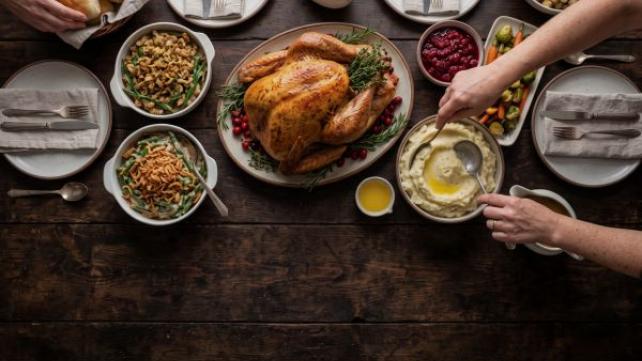
As we commemorate the season of gathering in unions, the auspicious habit of allowing a seat at the table for those who are least expected to join our community becomes even more necessary than ever. Considering their hardships and difficult circumstances, our doors in our congregations should remain open. As believers, we were raised to think of the mosque as the House of Allah that’s lively with remembrance of God, spreading beneficial knowledge and serving as a sacred place for tranquility, healing, and gratitude. That’s the spiritual mindset a believer should have in their mind when entering any place of worship. I can recall that, in my childhood, the mosque in our local area would host and facilitate many charity activities, like food and clothing drives during Ramadan, Quran lessons, and funding the needy in our community. I would say that mosque activities in Egypt, where I came from, are not so different from here in the US.
My dad was in the lead of many of these projects, but the most endearing to him was teaching the Quran to kids and youth. He had a beautiful tradition of teaching them “Suratul Fatiha”, the first chapter in the Quran. He was very patient with children, unwavering in his ability to listen and gently guide them in the right direction. He made a mosque policy that no one would be turned away due to any financial hindrance. As a result, the activity became more inclusive, and in order to make it more organized and practical, the enrollees were categorized by their level of skill as opposed to their social status, mental capacity, or age. It was about how much they could memorize, which was determined via practice.
The class was packed with children. My dad was really enjoying it, and over the years, he was able to recruit more kids, and more volunteers to help out. The system worked in such a way that if someone were to pass their current level, they could train others in order for them to level up in their skill.
One day, my dad came home disappointed and perplexed, which was unlike his typical state after class. We were best friends; I approached him and asked how the class went.
He expressed mixed emotions about a teenage girl with a mental disability visiting the class. He said that he was happy that her family felt safe enough for their daughter to come by and check the class at the mosque but was unsure about how exactly to approach her. I was surprised because, in my eyes, he had been through enough in life to handle the most difficult situations possible. As an early retiree with chronic illness, he understood what it meant to be disabled, and knew what it meant to turn people away from God’s Home because of expectations we have had in mind. Despite us as people working on these issues, we sometimes, unintentionally, neglect others’ needs because most of us just don’t see them.
When I asked him what specifically made him feel that way, all he said was that Allah was testing him through this girl. He said, “She’s a girl, a teen, with limited mental ability. She sneaked in, looked me in the eye, said something insulting, then everybody laughed. Then she just left.”
For a moment, I put myself in his shoes: if I were him, a dignified scholar, people would be expected to approach me with respect. So, if I left her to insult me, I’m letting everybody know that it’s okay to humiliate the Imam, and if I scolded her, she wouldn’t understand, possibly angering her and causing no real change in her behavior. But if I were to turn her away, I would be setting an example for everybody to follow me and do the same thing with someone that Allah had tested them with their cognitive ability.
My dad had so much respect and cared for people with disabilities, so much so that he taught me that someone with Down Syndrome was someone with a special kind of beauty. He taught me that being in service to someone with a disability is a door to blessings and grace that we should endear and embrace wholeheartedly. So, based on his teachings, I got what he meant. Then I asked him what he thought he should do, and he promptly responded with a prophetic saying where the Prophet said, (Narrated by Mus`ab bin Sa`d):
Once Sa`d (bin Abi Waqqas) thought that he was superior to those who were below him in rank. On that the Prophet (ﷺ) said, "You gain no victory or livelihood except through (the blessings and invocations of) the weak amongst you."
Then he said, “I will keep my door open, so I may see what Allah wanted to teach me through this”.
The classes went on, and my dad eventually learned that the girl was actually repeating what had been said to her, and when it made the kids laugh, she mistakenly thought that whatever she said was funny. So, he instructed the other kids not to laugh at whatever she said and allowed her to reserve a space for herself whenever she came. When she passed by during the following class, he welcomed her, ushered her to her seat, and told her that everybody would applaud her if she stayed for as long as she could, and promised her that there would be a prize waiting for her if she agreed. It was hard for her to follow the rules at first, but eventually, she listened and got the prize.
I assume that divine rewards may come in various different forms, and one of them is to stay loved by whomever Allah Almighty chooses.
I recall this story every Thanksgiving to do a better job welcoming the unwelcomed, and serving the less privileged, and encouraging others to do the same as well. Let’s keep our doors open, our hearts receptive, and our souls endearing to accept the differences amongst us every time we can.
May we be granted the love and nearness of those who are God’s beloveds and chosen people! Amen!
**********************
Author bio: Shama Farag is a published author, Arabic linguist, and a trained speaker with ING. As a lifelong seeker of knowledge and an advocate for language accessibility, She is a contributing Writer Editor for outlets such as Al Jazeera Arabic, Arabi Post, Cultural Bridges, and Little Farah Magazine.
Her academic background includes a Diploma in Islamic Theology from the International Open University in Qatar and an Ijaza in Hadith narration from the Imam Ghazali Institute. Outside of writing, She is involved in local advocacy. Currently she sits on a local school district Education Justice Committee, building on past service on the district's Ethnic Studies Committee and her county’s Developmental Disability Committee. She is also the author of several books, including Egyptian Food Made Easy, Mrs. Zee, the Substitute, The Talking Tree: A Look into Race, and I'm Different... I'm Special!.




Add new comment