
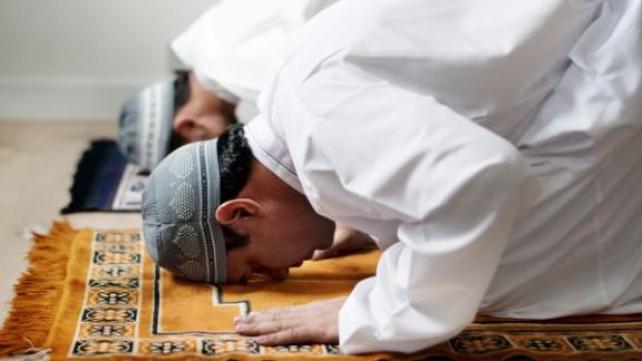
There are moments in life when words fail us. The weight of grief, the pressure of responsibilities, the ache of disappointment, or the quiet exhaustion of simply trying to keep going can leave us searching for solace—that deep comfort and relief that eases the heart when life feels heavy. Islam, in its divine mercy, offers two profound forms of healing that are often overlooked in their simplicity: the healing touch of human connection and the healing surrender of sajood.
One reaches the body. The other reaches the soul.
Together, they remind us that Allah Almighty created us to need both compassion from one another and complete dependence upon Him.
The Healing Power of Touch
The Prophet Muhammad, may Allah send peace and blessings upon him, was not only a teacher but also a source of immense comfort. His mercy was expressed not just through words but through gentle actions. He embraced children, comforted those who were grieving, placed his blessed hand upon the sick while making du'a, and reassured companions with gestures of kindness. His touch communicated safety, love, and dignity.
Modern research confirms what our faith has long embodied: appropriate, caring physical touch can reduce stress hormones, lower anxiety, and foster emotional security. A reassuring hand on a shoulder, a warm embrace between spouses, or a parent holding the hand of a frightened child can communicate, "You are not alone."
In a world increasingly dominated by screens and hurried schedules, many hearts silently long for meaningful connection. Sometimes healing begins with simply being present.
Sajood: Where the Heart Finds Its Cure
Yet there are wounds no human being can reach. There are burdens we cannot explain, tears we cannot justify, and fears we cannot articulate. For these moments, Allah Almighty invites us into sajood.
The Prophet, may Allah send peace and blessings upon him, said:
"The closest that a servant comes to his Lord is when he is prostrating, so increase your supplications therein." ( Muslim)
Sajood is unlike any other posture. The highest part of the body—the forehead—is placed upon the earth in complete humility before the Creator of the heavens and the earth. What appears to be the lowest physical position becomes the highest spiritual station.
Many of us have experienced it: entering prayer with a heart full of turmoil and rising from sajood with a peace we cannot fully explain. The circumstances may not have changed, but our perspective has. Allah Almighty reminds us that true tranquility is found in remembering Him.
Sometimes our greatest therapy is simply whispering our worries to the One who already knows them.
This is the essence of true solace. It is not merely the absence of hardship but the presence of Almighty Allah. Solace is the peace that settles upon the heart even when the trial remains, because the believer knows that every burden has been entrusted to the Most Merciful.
Healing Begins with Surrender
We often spend enormous energy trying to control every outcome. We carry tomorrow's worries while still struggling with today's responsibilities.
Sajood gently teaches us another way.
It teaches us to surrender—not in defeat, but in trust.
Every prostration is an acknowledgment that Allah is Al-Jabbar, the One who mends what is broken. He is Ash-Shafi, the One who grants healing. He is Al-Latif, gentle with His servants even when they cannot perceive His wisdom.
Healing does not always mean the difficulty disappears. Sometimes healing is the strengthening of the heart that continues despite the difficulty.
A Gentle Lesson in Parenting
Perhaps one of the most beautiful ways these two forms of healing meet is within the family. Children learn security long before they understand theology. A parent's embrace after a difficult day, a gentle hand on their head while making du'a, or sitting beside them before salah teaches lessons words alone cannot.
As parents, we naturally want to solve every problem our children face. Yet one of the greatest gifts we can offer is showing them where true comfort comes from. Let them see us turn in prayer to Almighty Allah. Let them witness tears in sajood, hear sincere du'as, and understand that even adults rely upon Allah.
When a child learns that loving touch can comfort the heart while sajood connects the soul to its Creator, they inherit resilience rooted in faith rather than circumstance. Our embrace may calm them for the moment. Their relationship with Allah Almighty will sustain them for a lifetime.
When Both Meet
There is profound beauty in comforting someone with your presence while silently praying that Allah heals what you cannot. A spouse offering reassurance. A friend sitting quietly beside someone in grief. A parent embracing a frightened child before leading them to make du'a. These moments remind us that believers become means of Allah's mercy for one another, while always recognizing that ultimate healing belongs to Him alone. We are not called to carry every burden ourselves. We are called to hold one another with compassion and then place every burden before Allah Almighty.
Returning to the Source of Peace
Life will continue to bring tests. Hearts will still break. Bodies will still tire. Relationships will still require patience. But Allah Almighty has not left us without refuge. Sometimes healing comes through the warmth of a caring hand. Sometimes it comes through tears that fall onto a prayer mat in the quiet hours of the night. And often, by Allah Almighty’s mercy, it comes through both.
This is the solace that Allah Almighty offers His servants—not a promise that life will be free from hardship, but the assurance that no heart turns to Him without finding comfort, strength, and hope.
May Allah Almighty make our hands a source of comfort for those around us, our homes places of mercy, our children witnesses to faith lived with sincerity, and our sajood the place where every weary heart finds its way back to Him.
"Indeed, in the remembrance of Allah do hearts find rest." (Qur'an 13:28)
Author bio: Miriam is the proud mother of seven children of different ages, an experience that shapes her perspective on education and advocacy. Based in the Chicagoland area, she has taught in an Islamic school and currently works in a public school, supporting students and families and promoting inclusive learning environments. As the mother of a child with autism, Miriam brings personal insight and compassion to her work advocating for children with diverse learning and developmental needs. She is passionate about fostering inclusion, understanding, and equity within her community.
Related:
(1) An Arrow that Never Misses
(3) When will the Help of Allah Come? Tawakkul as our Compass for Success







Add new comment