
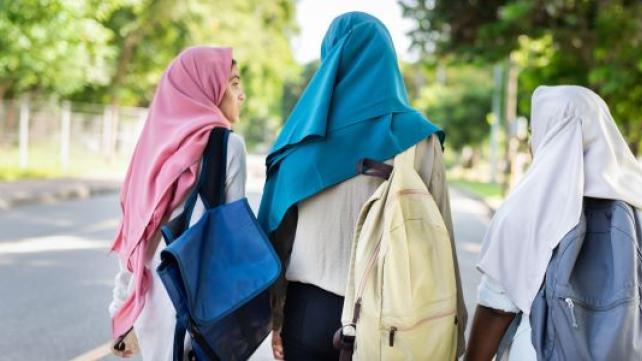
SUMMARY: See helpful tips for the parents of Muslim students entering high school at a public school, based off the feedback of Muslim mothers who have experienced this step in their children's education.
If you are a parent of a child entering high school this school year, congratulations! You have made it to the next level of the parenting game! In four years, your son or daughter will be graduating from high school while you fight back tears of both joy and grief, in sha Allah. However, rather than focusing on the end goal, we need to approach the beginning of this new stage with care. With 75% of Muslim families sending at least one child to public school, it is safe to say that most Muslim high schoolers will be attending their local public school. Sadly, in recent years, nearly half of Muslim K-12 families surveyed reported that their children experienced religion-based bullying at school.1 As Muslim youth spend these four crucial years of their formal education in public schools, families should be prepared to support their children, while schools must ensure environments that are safe, inclusive, and free from bigotry.
Because the majority of us are sending our teens to public school, we must first forgive ourselves for not being able or willing to send them to a private school, whether Islamic or otherwise. Private schools are not always accessible, and they can be prohibitively expensive for the average Muslim family. Just because your children are not attending an Islamic school does not mean they will not succeed or that they will be led astray. Only a few decades ago, Islamic schools were relatively uncommon, especially those that offered education through 12th grade. Yet plenty of Muslim adolescents have successfully navigated the public school system, gone on to earn university degrees and/or enter the workforce, and started families of their own while holding firmly to their religious beliefs.
One of the best ways to prepare for this new stage is by speaking with other parents who have "been there and done that." Before writing this article, I asked women in several Muslim parenting forums whose children had already completed their high school years to share their best advice for preparing families for this transition. The following tips are based on their feedback.
1. Keep an “open door policy”
Just because your child is older and becoming more independent does not mean they no longer benefit from mom and dad's company. Keep the lines of communication open. Whenever they want to talk, put everything else aside. Put your phone down, pause whatever you are doing, look them in the eye, and give them your undivided attention. The last thing you want is for your child to feel ignored when they need you most.
2. Lecture less, listen more.
Your presence should be a safe haven where your teen feels comfortable expressing themselves openly. Let them know, even before school starts, that you will always be there to support them, and then reinforce that message every day through your actions. Do not shut them out, talk over them, or judge them harshly. Otherwise, they may stop sharing things with you out of fear that you will not understand or support them.
3. Expect changes
Your child may not tell you this outright, but they will likely feel overwhelmed. High school can be intimidating with its new building, classes, teachers, routines, and peer groups. On top of that, they are navigating significant physical, emotional, and social changes. Expect shifts in personality, interests, and even beliefs, but do not view them as a personal failure. Trust the values you have instilled and the effort you have invested in your parenting. Even if your son or daughter comes home with doubts, difficult questions, or ideas that surprise you, keep an open mind. Adolescents naturally explore different perspectives as they try to discover who they are and make sense of the world around them. Chances are they will be just fine, especially if you remain calm, supportive, and available.
4. Show them affection on their terms
Every child is different when it comes to their love language.2 Some still appreciate hugs and kisses, while others shy away from physical affection altogether. Respect their boundaries while continuing to show them love in ways they are comfortable with. One mom advised parents to look their teens in the eyes when they come home from school and greet them with salam. Maintain eye contact for 10 to 12 seconds to connect "soul to soul." She shared that this simple practice has helped her stay closely connected with her now young adult children.
5. Welcome their friends
Friendship is a crucial part of the high school experience. Your teen will naturally want to build friendships with peers who share similar interests, even if they come from backgrounds different from your own. Welcome their new friends into your home. Get to know them as individuals and avoid judging them simply because they are different. Treat your teen's friends with dignity, respect, and hospitality. Remember, they are someone else's child, just as your teen is yours.
6. Keep Them Connected to the Muslim Community
Make sure your teen has a welcoming, nonjudgmental Muslim space where they can be themselves. If you do not already have a strong circle of Muslim family and friends, consider building one with other parents. Organize activities at your local masjid or in your home where young people can gather, including your teen's friends. Find reasons to celebrate, serve others, and spend time together throughout the year. Regular opportunities to be around other Muslims can strengthen your teen's religious identity while giving them a genuine sense of belonging.
7. Volunteer at their school
You may think that parent volunteer opportunities are limited at the high school level, but there are still plenty of ways to get involved. Parents can assist with clubs, sports, fundraisers, school events, and other activities. You can also provide administrators and teachers with information about Ramadan and Eid, advocate for appropriate accommodations for Muslim students, and offer to help organize inclusive school events whenever possible.
8. Make prayer a priority
It is important that your high schooler begins taking responsibility for their own prayers, including Fajr and those that fall during the school day. Help them develop a plan for fulfilling their religious obligations with minimal disruption to their education. Before the school year begins, discuss prayer accommodations with a guidance counselor or administrator and help your teen identify an appropriate place to pray if needed.
9. Take them back-to-school shopping
Forget the crayons, colored pencils, scissors, and folders of the elementary and middle school years! High schoolers are often more interested in clothing, accessories, and other items that help them express their personalities. Without breaking the bank, take your teen back-to-school shopping and let them choose modest clothing that reflects their individual style. If we want our teens to remain confident in their Muslim identity, it is important to give them an appropriate level of ownership over the wardrobe they wear every day.
10. Last but not least, pray!
Your child needs your prayers now more than ever. The high school years are filled with challenges, but a parent's sincere dua can help them through even the most difficult trials. The Prophet Muhammad, peace and blessings be upon him, said that the supplication of a parent over his/her child is answered without a doubt (Sunan al-Tirmidhi 1905). Take advantage of that enormous blessing.
One of the greatest influences on a teen's success is the continued involvement of their parents. High school is a time to remain present, offer guidance, and gradually prepare them for adulthood. The next four years will bring tremendous change. Your child will likely reach full physical maturity, take on greater religious responsibilities like prayer and fasting, learn to drive, prepare for college or a career, and begin making decisions that will shape the rest of their life. Be mentally prepared for the time, patience, and effort it takes to help your teen become a responsible Muslim adult. Turn to Allah in every matter, and never stop making dua for His guidance, protection, and blessings for your child in this life and the next.
- https://ispu.org/research-areas/muslim-families/
- Find out your child’s love language by letting them take a love language quiz here: https://5lovelanguages.com/quizzes/love-language
Related:
(2) How to help your Child start a Muslim Student Association at School







Add new comment