
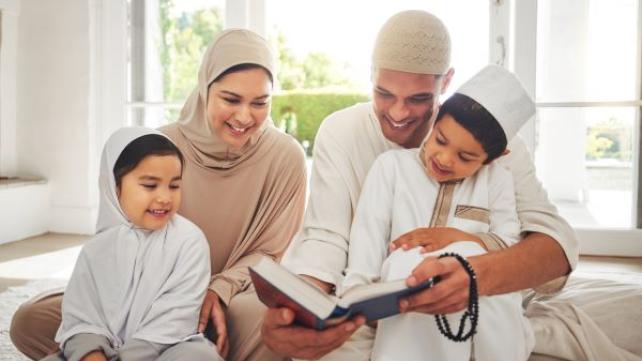
The act of sharing knowledge is the foundation of Islam. The prophet Muhammad (pbuh) shared the revelation he received in the Quran. The companions of the prophetic age shared their observations of his actions and words in the reported hadith. Scholars of fiqh share their knowledge established from primary and secondary sources of Islamic law. Imams share teachings from Quran and the traditions of the Prophet Muhammad (pbuh) responding to the needs of the community.
Knowledge multiplies in knowledge.
The last few words of the final sermon to the faithful, the prophet Muhammad (pbuh) reminded those present to share knowledge and that by doing so the benefits of the knowledge would likely increase:
“….All those who listen to me shall pass on my words to others and those to others again; and may the last ones understand my words better than those who listened to me directly… ."
In this final commentary, he calls on Allah to increase the knowledge and understanding of believers in the present and over time.
As an example to all mankind, these prophetic words are a guide for the community, family and the individual.
Within the family – parents and children, extended family members and elders all have a mutual obligation to share their knowledge and receive knowledge shared with them. In doing so the insight, perceptions and comprehension of valued information is internalized by each member and increases understanding of ibadah and amal – the good deeds done.
Grands – the grey-haired Muslims of the family
Narrated AbuMusa al-Ash'ari:
The Prophet (SAW) said: Glorifying Allah involves showing honor to a grey-haired Muslim and to one who can expound the Qur'an, but not to one who acts extravagantly regarding it, or turns away from it, and showing honor to a just ruler.
Sunan Abi Dawud 4843
- Each generation of Muslim have cultural and societal circumstances and understanding of Islam. Within the family, the layers of appreciation for Islam begin with looking at the actions and experiences of the prophetic age. The experiences of the older generation offer perspective on present day action and understandings.
- Older generations who embraced Islam from another tradition have knowledge to share of how Islamic beliefs invigorated them, caused a change of lifestyle, established new traditions, names, dress, eating patterns etc. These are things that successive generations may take for granted or not fully understand the struggle and joy that came with the transition. Understanding the beauty of being a shahadah at one point of time takes family members back to the reality of Muslims during the prophetic age.
- The challenges faced and overcome by older generations of Muslims in America reveal how understanding of Quran and Islamic fiqh shaped their drive to establish Muslim women in the society modestly dressed or how and why non-Muslims in the inner cities routinely offer the Salaams when they see a Muslim.
- Older generations who migrated to America have knowledge to share how to integrate Islamic practices within a new culture. Their experiences lay the foundation for rules and expectations that exist in the family and offers perspective so that younger family members of all generations have knowledge of their history and application of Islamic beliefs.
It is reported on the authority of 'Abdullah that the Apostle of Allah (SAW) observed:
The best of' the deeds or deed is the (observance of) prayer at its proper time and kindness to the parents.
Sahih Muslim Book 1, Hadith 162
Parents
- Islam places great value on parents and respecting them means listening to their words and applying the wisdom that is shared.
- Parents share knowledge of their understanding and application of Islam within the home and within the society. Parents can share their experiences with non-Muslims as well as share those actions done when they were younger that failed them in the moment or later.
- Parents sharing knowledge of Quran and sunnah application of their lives helps young generations navigate their lives as well as giving younger generations expectations of behavior at a time when they may not fully understand contextually.
Youth
Young people are mentioned in the reported sayings of the prophet Muhammad (pbuh) concerning the seven groups of people who will be under the shade of Allah’s throne on the Day of Judge includes
…a youth who grew up in the worship of Allah
Sahih Bukhari 630
- Islam respects all members of the family. In our digital age, the youth take the lead in navigating each new application offered for Islamic learning. Also each generation has unique circumstances and experiences that impact their Islamic life and understanding. It is beneficial to parents to comprehend the challenges and successes of the younger generation.
- Younger members of the family can share knowledge of how they apply the teaching of Islam contextually while attending school with non-Muslims, while attending Islamic institutions and while learning at home.
- Their unique circumstances help parents understand how to respond and support them in their spiritual journal.
- In addition, when youth share their understanding on matters of Islam, parents and grandparents can assess how knowledge, understanding and application of religious concepts have improved and evolved over time, realizing the intent and direction of some of the last words spoken by the prophet Muhammad (pbuh).
**********************
Author bio: Mahasin D. Shamsid-Deen is the news curator and content manager for Muslim Network TV (MNTV) and contributing writer for Sound Vision. She holds a master’s degree in English writing and has worked as both a High School and College ESL Instructor and Writing Instructor for more than a decade. Mahasin has numerous published articles, books, essays and is a published playwright with three award winning stage plays. She is currently writing her dissertation for her doctoral degree.


Add new comment